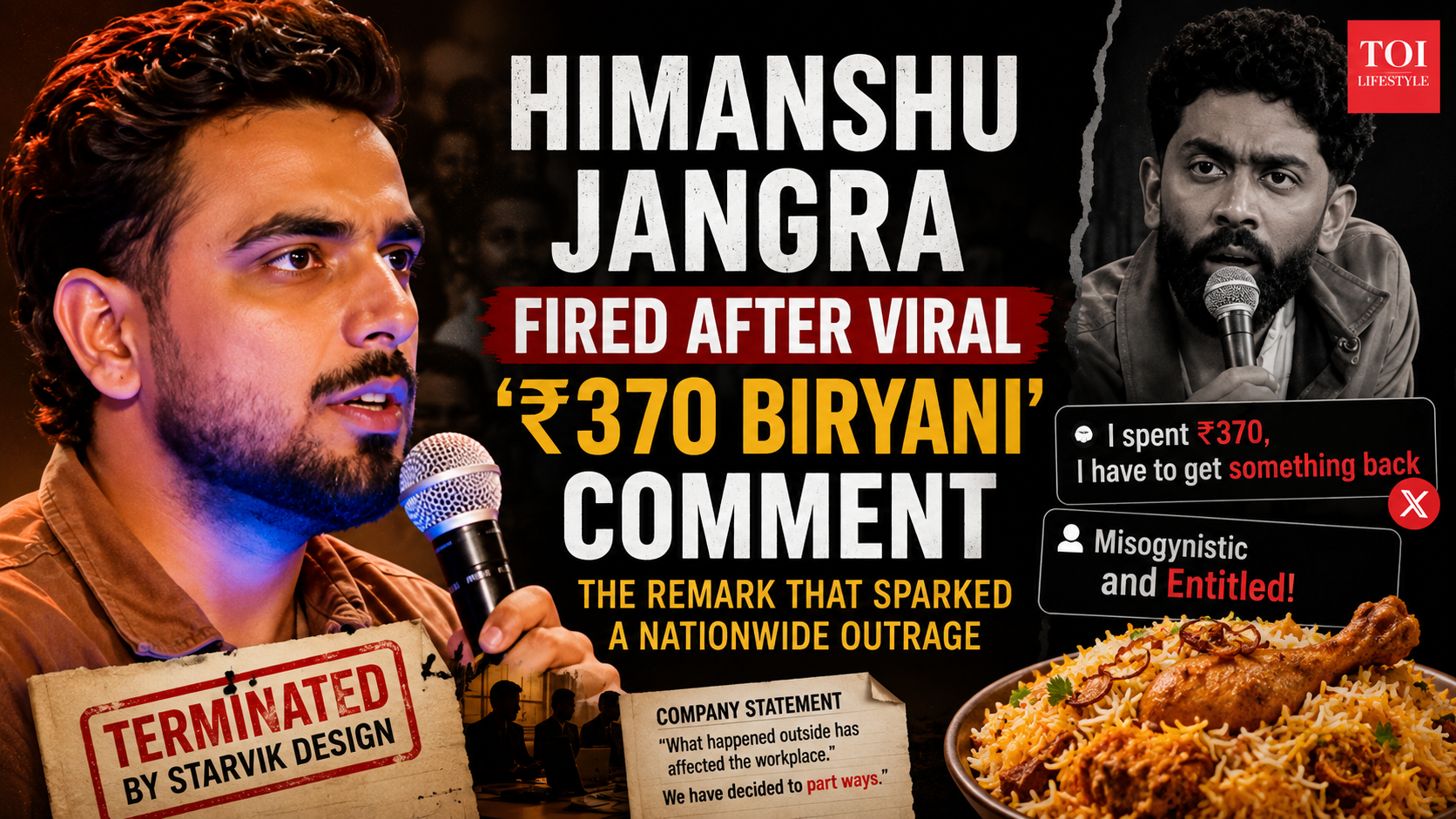
The controversy centers around Himanshu Jangra, a 23-year-old software professional from Gurgaon, whose comments during comedian Pranit More’s stand-up performance quickly spread across social media platforms. What initially appeared to be a crowd interaction segment soon turned into one of the most discussed internet controversies of the week, eventually resulting in professional consequences for the young developer.
The incident has raised important questions about personal responsibility, public behavior, corporate image, and the impact that viral moments can have on an individual’s career.
What Did Himanshu Jangra Say?
The controversy began during a crowdwork segment at comedian Pranit More’s stand-up show.
While interacting with audience members, More invited people to share personal experiences and stories. During this interaction, Himanshu Jangra recounted an incident involving a date where he claimed to have spent Rs 370 on a plate of chicken biryani.
According to the viral clip, Jangra suggested that because he had paid for the meal, he expected some form of “return” on his expenditure.
His statement:
“Maine kaha 370 rupay lage hain, main wasool toh karunga.”
Translated loosely, the statement implied that because he spent money on the date, he was entitled to receive something in return.
The situation became even more controversial when he went on to describe taking the woman to a secluded park after considering bringing her to his room.
Many viewers interpreted the remarks as promoting a transactional view of relationships and displaying a troubling sense of entitlement.
Within hours, clips of the interaction began circulating across Instagram, X (formerly Twitter), Reddit, and YouTube.

Social Media Reacts Strongly
The internet’s response was swift and intense.
Thousands of users condemned the comments, describing them as:
- Misogynistic
- Problematic
- Disturbing
- Disrespectful toward women
- Reflective of toxic dating attitudes
Many users argued that paying for food or a date does not create any obligation or entitlement toward another person.
Several social media users pointed out that consent, respect, and mutual comfort should never be treated as something that can be purchased.
The clip quickly became one of the most discussed viral moments online, with hashtags and reaction videos further amplifying the controversy.
Relationship experts, content creators, and social commentators also joined the discussion, emphasizing that healthy relationships are built on mutual respect rather than financial expectations.
The Debate Around Dating Entitlement
One reason the clip gained so much attention is because it touched on a larger societal issue.
Modern dating often involves discussions around:
- Who pays the bill
- Gender expectations
- Relationship dynamics
- Consent and boundaries
While many people view paying for a meal as a gesture of kindness or generosity, critics argued that Jangra’s comments suggested a transactional mindset.
The viral debate highlighted a growing concern about how some individuals perceive dating and relationships.
Many women shared personal experiences online, explaining how they have encountered similar attitudes during dates.
Others emphasized that spending money on someone should never create an expectation of physical, emotional, or romantic returns.
The incident ultimately became larger than one individual, evolving into a broader discussion about respect and consent in modern relationships.
Starvik Design Responds
As the controversy continued to grow, attention soon shifted toward Jangra’s employer.
Social media users began identifying him as an employee of Starvik Design, a Gurgaon-based company.
The company soon found itself flooded with emails, messages, and calls regarding the viral video.
In response, Starvik Design founder Vivek Vishwakarma released a public statement addressing the matter.
According to Vishwakarma, the company conducted an internal review after becoming aware of the controversy.
He stated:
“Like many of you, I came across the clips that have been circulating online.”
The company reportedly spoke with several employees and team members, including women staff members, to determine whether there had been any workplace complaints regarding Jangra.
Internal Investigation Found No Workplace Misconduct
Interestingly, Starvik Design revealed that its review found no complaints related to Jangra’s conduct within the workplace.
According to the company’s statement, colleagues described him as:
- Professional
- Respectful
- Hardworking
- Cooperative
- Well-behaved
The organization clarified that there was no evidence suggesting any inappropriate behavior within the company environment.
However, despite these findings, the company ultimately decided to terminate his employment.
Why Was He Fired?
The company’s explanation focused on the wider impact of the controversy.
Vishwakarma explained that although the incident occurred outside work, it had begun affecting the workplace itself.
He stated:
“What happened outside the workplace has now affected the workplace, and I have a responsibility towards the company, our team, our clients, and the environment we create here.”
The company concluded that continuing the employment relationship was no longer in its best interests.
As a result, Starvik Design announced that it had decided to part ways with Himanshu Jangra.
The decision immediately sparked another debate online.
Internet Divided Over The Termination
While many people supported the company’s decision, others questioned whether an individual should lose their job over comments made during a comedy show.
Supporters of the termination argued:
- Public actions have consequences.
- Companies must protect their reputation.
- Employers have a responsibility to maintain workplace values.
Critics, however, argued:
- The comments were made outside the workplace.
- There was no evidence of professional misconduct.
- Employment consequences may be disproportionate.
The situation reignited ongoing discussions about “cancel culture,” accountability, and the boundaries between personal and professional life.
Pranit More Also Faces Criticism
The controversy did not stop with Jangra.
Many social media users also criticized comedian Pranit More for how he responded during the interaction.
Some viewers felt More should have challenged or questioned the remarks instead of appearing to laugh and move on.
As criticism mounted, the comedian released a public statement acknowledging the concerns.
In his apology, More said:
“Looking back, I should have challenged the remark instead of laughing and moving on. That was a lapse in judgement on my part.”
He clarified that the audience member’s comments did not reflect his personal views.
The comedian also thanked those who raised concerns respectfully and promised to learn from the experience.
The Growing Influence of Viral Moments
The incident highlights how quickly a single moment can change someone’s life in the digital age.
Today, a few seconds of video can:
- Reach millions of viewers
- Trigger national debates
- Impact careers
- Influence public perception
What might once have remained a conversation among a few dozen people inside a comedy club can now become a global discussion overnight.
Experts increasingly warn that individuals must be aware that public statements can have far-reaching consequences.
Lessons From The Controversy
Several key lessons emerge from this episode:
1. Public Statements Matter
Comments made casually in public spaces can quickly become viral content.
2. Consent Cannot Be Transactional
Many users emphasized that paying for a meal does not entitle anyone to romantic or physical expectations.
3. Companies Are Protecting Their Reputation
Businesses are increasingly taking action when employee behavior becomes a public issue affecting the organization.
4. Social Media Amplifies Accountability
The internet now plays a significant role in shaping public accountability and influencing corporate decisions.
Conclusion
The firing of Himanshu Jangra following his viral “Rs 370 biryani” comments has become one of the most talked-about internet controversies in recent weeks. What started as a crowdwork interaction at a comedy show evolved into a national discussion about dating culture, entitlement, consent, workplace responsibility, and online accountability.
While opinions remain divided on whether termination was the appropriate consequence, the incident demonstrates how rapidly public perception can shape real-world outcomes in the digital era.
As conversations continue online, the controversy serves as a reminder that words carry weight—and in the age of social media, even a brief moment on stage can have lasting consequences.