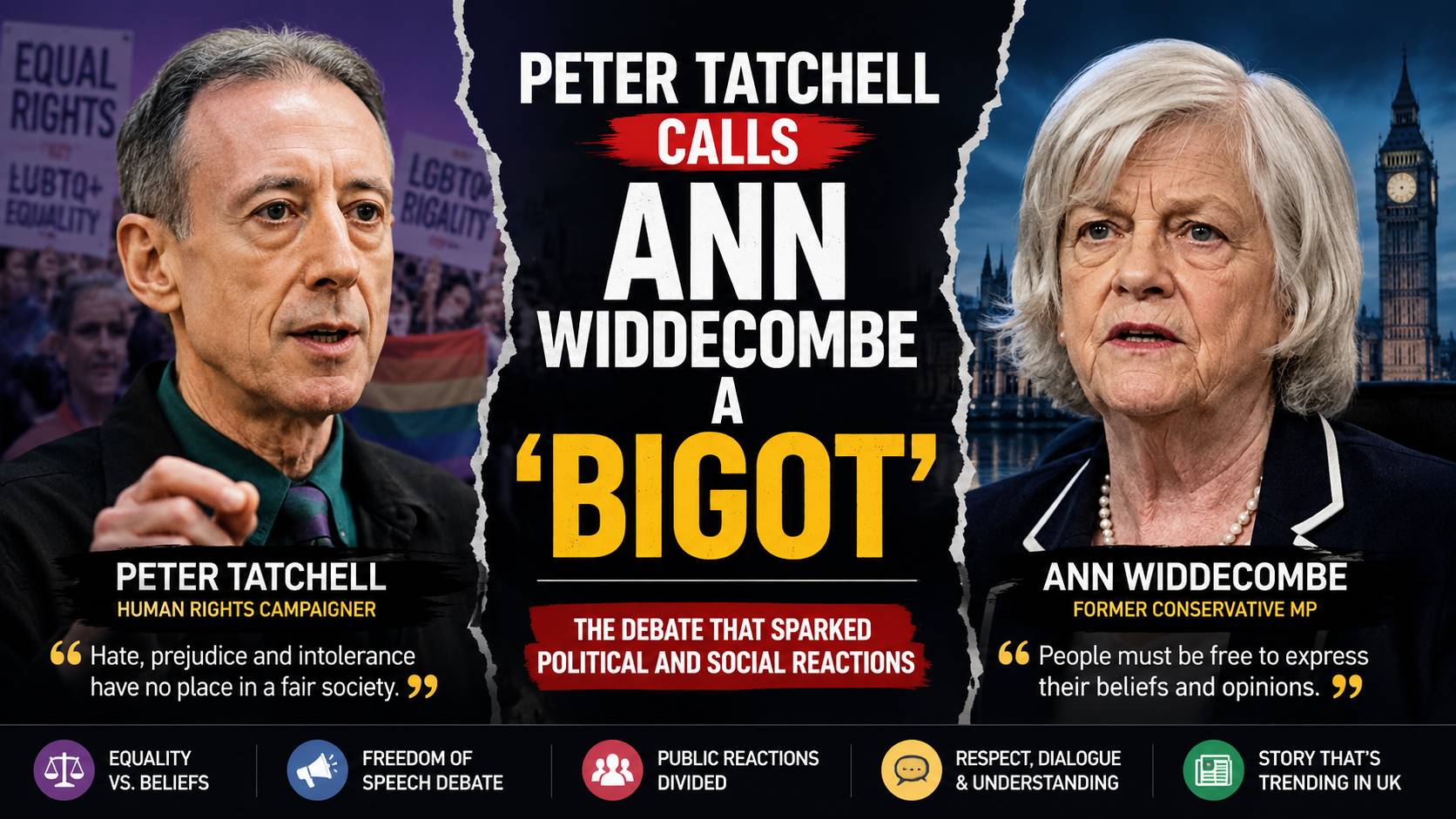
Public debates surrounding equality, free speech, and social values continue to dominate political discourse in the United Kingdom. One of the latest controversies making headlines involves renowned human rights campaigner Peter Tatchell and former Conservative MP Ann Widdecombe, after Tatchell publicly described Widdecombe as a “bigot.”
The exchange has reignited discussions about freedom of expression, LGBTQ+ rights, political opinions, and where society should draw the line between expressing personal beliefs and promoting discriminatory views.
As reactions spread across social media and news platforms, many people are asking what led to the confrontation, why Peter Tatchell used such strong language, and what the wider implications are for political debate in Britain.
In this article, we take an objective look at the incident, the backgrounds of both public figures, the issues at the heart of the disagreement, and why this debate continues to attract national attention.
Who Is Peter Tatchell?
Peter Tatchell is one of Britain’s best-known human rights and LGBTQ+ campaigners.
For decades, he has advocated for:
- LGBTQ+ equality
- Human rights
- Freedom of expression
- Democratic reform
- International human rights protections
Throughout his career, Tatchell has campaigned against discrimination and has often challenged governments, religious institutions, and political leaders over issues relating to equality and civil liberties.
His activism has made him both widely respected and, at times, controversial.
Who Is Ann Widdecombe?
Ann Widdecombe is a former Conservative Member of Parliament, author, broadcaster, and political commentator.
She has been known for expressing conservative views on issues including:
- Family values
- Religion
- Immigration
- Criminal justice
- Social policy
Over the years, Widdecombe has made public comments on LGBTQ+ issues that have generated significant criticism from campaigners and advocacy groups, while supporters argue she is expressing sincerely held religious and political beliefs.
What Led to the Controversy?
The controversy arose during public discussion surrounding LGBTQ+ rights and related social issues.
Peter Tatchell criticized Ann Widdecombe’s remarks, describing her as a “bigot.”
His criticism reflects a long-standing disagreement over issues involving:
- LGBTQ+ equality
- Same-sex relationships
- Gender identity
- Religious freedom
- Public policy
While Tatchell argued that certain comments contribute to discrimination against LGBTQ+ communities, Widdecombe and others have maintained that expressing religious or political opinions should remain protected under freedom of speech.
Why the Word “Bigot” Is Significant
The word “bigot” carries strong emotional and political weight.
It is generally used to describe someone perceived as:
- Intolerant
- Prejudiced
- Unwilling to accept differing identities or beliefs
Because the term implies serious criticism of a person’s attitudes rather than simply disagreement with their opinions, its use often intensifies public debate.
Supporters of Tatchell argue the description accurately reflects views they consider discriminatory.
Supporters of Widdecombe reject the characterization and argue that disagreement with particular policies does not automatically constitute prejudice.
The Broader Debate
The disagreement extends beyond two individuals.
It reflects broader societal conversations surrounding:
- Equality
- Religious freedom
- Political expression
- Human rights
- Respectful public discourse
These issues have become increasingly prominent in many democracies.
Freedom of Speech vs. Hate Speech
One recurring question involves distinguishing between protected expression and speech considered discriminatory.
Many legal systems recognize freedom of expression as a fundamental right while also placing limits on unlawful discrimination or incitement.
The balance between these principles continues to be debated by lawmakers, courts, advocacy organizations, and the public.
LGBTQ+ Rights in the UK
Over recent decades, the United Kingdom has introduced significant legal protections for LGBTQ+ individuals.
Key developments include:
- Legal recognition of same-sex marriage (in England, Wales, and Scotland)
- Anti-discrimination legislation
- Workplace equality protections
- Recognition of civil partnerships
- Expanded legal rights for LGBTQ+ individuals
Despite these advances, debates over gender identity, education, healthcare, and religious freedom remain active.
Peter Tatchell’s Perspective
Throughout his activism, Peter Tatchell has consistently argued that:
- Equality should apply to everyone.
- Discrimination should be challenged.
- Public figures have responsibility for the impact of their statements.
- Human rights should be protected regardless of sexual orientation or gender identity.
His criticism of Widdecombe aligns with decades of advocacy focused on opposing what he views as discriminatory rhetoric.
Ann Widdecombe’s Perspective
Ann Widdecombe has frequently stated that her views are informed by her religious beliefs and conservative values.
Supporters argue that:
- People should be free to express religious convictions.
- Political disagreement should not automatically lead to personal attacks.
- Diverse viewpoints strengthen democratic debate.
Critics, however, contend that certain public statements can negatively affect marginalized communities.
Public Reaction
The exchange quickly attracted widespread discussion online.
Supporters of Peter Tatchell praised his willingness to challenge language they view as harmful.
Supporters of Ann Widdecombe defended her right to express her opinions without being labeled personally.
As with many high-profile public debates, reactions varied considerably depending on political, social, and cultural perspectives.
Social Media Amplifies Political Disagreements
Platforms such as X (formerly Twitter), Facebook, Instagram, and YouTube have significantly changed how political debates unfold.
Comments from public figures can quickly become national or international news, generating thousands of reactions within hours.
While social media enables broader participation in public discussions, it can also contribute to polarization and rapid escalation of disagreements.
The Importance of Civil Debate
Regardless of individual viewpoints, many commentators emphasize the importance of respectful dialogue.
Constructive public debate often benefits from:
- Listening carefully
- Verifying facts
- Avoiding personal attacks
- Engaging with opposing arguments respectfully
Civil discussion helps democratic societies address complex issues more effectively.
Media Coverage
News organizations have reported the disagreement from a range of editorial perspectives.
Readers are encouraged to consult multiple reputable sources to better understand differing viewpoints and the broader context surrounding public statements.
Political Implications
Although the disagreement centers on social issues, it also reflects wider political divisions over:
- Equality legislation
- Freedom of religion
- Education policy
- Human rights
- Public discourse
Such debates are likely to remain part of UK political conversations in the years ahead.
Why This Story Matters
This controversy illustrates how discussions surrounding identity, equality, and freedom of expression continue to shape public life.
It also highlights the influence prominent campaigners and political commentators have in framing national conversations.
Understanding these debates requires considering multiple perspectives while remaining grounded in verified information.
Final Thoughts
The exchange in which Peter Tatchell referred to Ann Widdecombe as a “bigot” has sparked renewed discussion about equality, free expression, religious beliefs, and political discourse in the United Kingdom. Supporters of Tatchell view his criticism as a defense of LGBTQ+ rights and opposition to discriminatory attitudes, while supporters of Widdecombe argue that expressing religious or conservative views should not automatically invite personal labels.
As with many issues involving politics and social values, opinions remain deeply divided. The debate underscores the importance of engaging with complex topics thoughtfully, considering differing viewpoints, and relying on credible information rather than assumptions.
Regardless of where individuals stand on the issues, respectful dialogue and informed discussion remain essential for addressing the challenges of an increasingly diverse and democratic society.
Stay connected with Inetfreak for balanced coverage of technology, politics, world news, digital trends, AI developments, and the stories shaping today’s global conversations.
Frequently Asked Questions (FAQs)
Who is Peter Tatchell?
Peter Tatchell is a British human rights and LGBTQ+ campaigner known for decades of activism promoting equality and civil liberties.
Who is Ann Widdecombe?
Ann Widdecombe is a former Conservative MP, broadcaster, and political commentator known for her conservative political and religious views.
Why did Peter Tatchell call Ann Widdecombe a “bigot”?
Tatchell publicly criticized comments made by Widdecombe on LGBTQ+ issues, describing them as reflecting prejudice. Supporters and critics interpret this characterization differently.
Why is this debate significant?
The discussion touches on broader issues including freedom of expression, LGBTQ+ rights, religious beliefs, and the role of public figures in political debate.
Are opinions divided?
Yes. Reactions have varied widely, with some supporting Tatchell’s criticism and others defending Widdecombe’s right to express her views.
This website is proudly managed and maintained by Shunya Digit.