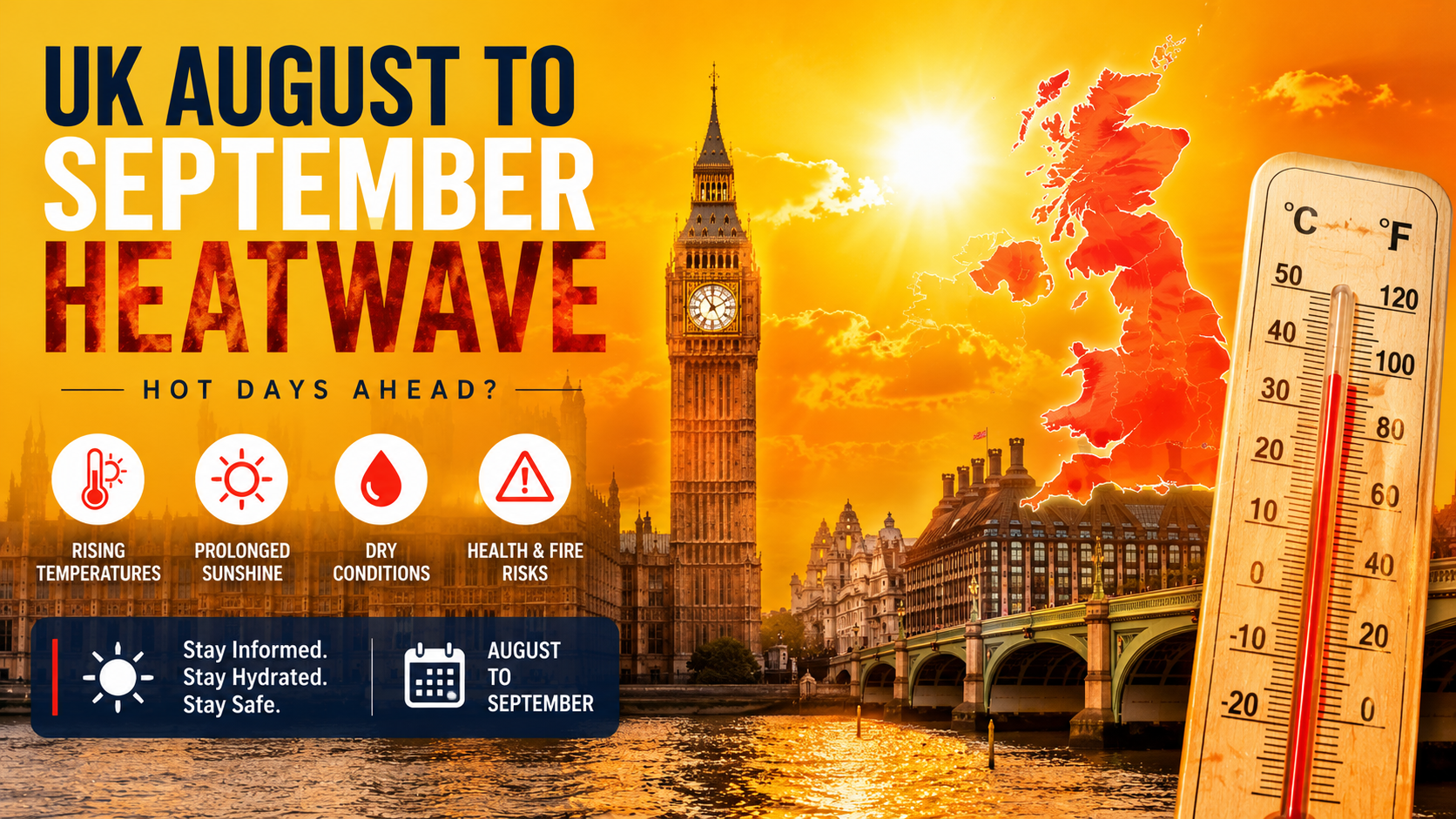
The possibility of a UK August to September heatwave is attracting attention as summer moves toward its final weeks and the country prepares for the transition into early autumn. While British weather is famously changeable, late summer can still produce periods of unusually high temperatures, prolonged sunshine and heat-related risks.
A heatwave during August can be particularly noticeable because schools, holidays, outdoor events and travel are still in full swing. If hot conditions continue into September, the situation becomes even more interesting because September normally marks a gradual shift toward cooler nights, shorter days and more unsettled weather.
However, predicting a specific heatwave several weeks in advance is difficult. Weather conditions can change considerably as the forecast period gets longer. A warm spell may develop quickly, while an expected period of high temperatures can also weaken or disappear as atmospheric patterns change.
For people searching for information about a UK August to September heatwave, the most important question is not simply whether temperatures will rise. It is how long unusually hot conditions could last, which parts of the country could experience the highest temperatures and what impact sustained heat could have on people, transport, agriculture and the environment.
What Is a Heatwave in the UK?
A heatwave is more than simply having a few warm summer days.
In the UK, heatwave conditions are assessed using temperature thresholds that vary depending on location. This is because what constitutes unusually dangerous heat in one part of the country may be different elsewhere.
The UK’s relatively cool climate means that extended periods of high temperatures can have a significant impact even when temperatures are not as extreme as those experienced in traditionally hot countries.
During prolonged hot weather, the risks can increase for older people, young children, people with certain health conditions and those working outdoors.
The length of a hot spell is also important.
A single hot afternoon may be manageable for most people, but several consecutive days of high daytime temperatures combined with warm nights can place additional stress on the body.
Why August Can Bring Very Hot Weather
August is normally one of the UK’s warmest months.
Although the country is surrounded by relatively cool seas and is strongly influenced by Atlantic weather systems, high-pressure areas can occasionally dominate the weather.
When high pressure becomes established, cloud cover can decrease and sunshine can increase.
If winds bring warmer air from southern Europe or continental Europe, temperatures can rise significantly.
The exact outcome depends on the position of high-pressure systems, wind direction, humidity and the amount of cloud.
A strong area of high pressure can therefore create several days of dry and sunny conditions.
If the setup remains in place for long enough, a heatwave can develop.
Could Hot Weather Continue Into September?
September is a transitional month.
The days gradually become shorter, while nights become longer. The sun is lower in the sky than it is during June and July, reducing the amount of solar heating available.
However, this does not mean September cannot be hot.
The UK has experienced significant warm spells during September in the past.
Under the right atmospheric conditions, temperatures can remain well above seasonal averages.
Warm air arriving from continental Europe or southern regions can produce unusually high temperatures even after the calendar has moved into meteorological autumn.
This is why the possibility of an August to September heatwave cannot be dismissed simply because September is approaching.
Why September Heat Can Feel Different
A September heatwave can have a different character from a July or August heatwave.
The lower angle of the sun means daytime heating is generally less intense than during the peak of summer.
However, dry ground conditions can sometimes allow temperatures to rise efficiently during sunny days.
The biggest difference is often the contrast between daytime and nighttime conditions.
Clear skies can produce warm afternoons but cooler nights.
This can provide some relief after sunset, particularly compared with severe summer heatwaves in which overnight temperatures remain unusually high.
Which Parts of the UK Could Be Warmest?
During a UK heatwave, temperatures can vary considerably between regions.
Southern England is often among the areas most likely to experience the highest temperatures during hot continental air outbreaks.
London and parts of southeast England can become particularly warm because of their location and urban environment.
East Anglia can also experience high temperatures during settled summer weather.
Parts of the Midlands may experience significant heat as warm air spreads northward.
Wales and northern England can also become hot, although temperatures may vary depending on elevation, cloud cover and wind direction.
Scotland can experience warm conditions as well, but its northern and western areas are often more strongly influenced by Atlantic weather systems.
The exact regional pattern during any future heatwave would depend on the atmospheric setup at the time.
The Role of High Pressure
High pressure is one of the key ingredients behind many prolonged periods of hot and settled UK weather.
Under high pressure, air tends to descend, reducing cloud formation.
This can lead to:
Clear skies
Long periods of sunshine
Dry conditions
Light winds
Rapid daytime warming
If high pressure remains over or near the UK for several days, temperatures can gradually increase.
The position of the high-pressure system is particularly important.
A high-pressure system located to the east or southeast of the UK can sometimes help draw warmer continental air toward Britain.
The Role of Continental Air
Air arriving from continental Europe can significantly influence UK temperatures.
During summer, continental land areas can become considerably hotter than the surrounding Atlantic Ocean.
If winds move this warm air toward Britain, temperatures can rise quickly.
This type of setup has contributed to some of the UK’s most notable hot-weather events.
The direction of the wind therefore matters as much as the strength of the sunshine.
A southerly or southeasterly airflow can bring substantially warmer air compared with a cooler northwesterly flow from the Atlantic.
Heatwave and Humidity
Temperature is not the only factor that determines how uncomfortable hot weather feels.
Humidity also matters.
High humidity reduces the body’s ability to cool itself through sweating.
This means a moderately high temperature can feel considerably more uncomfortable when moisture levels in the air are high.
On the other hand, dry heat can feel intense during the afternoon but may be followed by cooler nighttime conditions.
The combination of high temperature and humidity is therefore an important factor when assessing heat-related health risks.
Health Risks During a UK Heatwave
Extended hot weather can affect health in several ways.
Dehydration is one of the most common concerns.
People lose more water through sweating when temperatures are high, particularly during physical activity.
Heat exhaustion can also occur.
Symptoms may include:
Heavy sweating
Dizziness
Weakness
Headache
Nausea
Extreme tiredness
If heat exposure becomes severe, heatstroke can become a medical emergency.
People should take particular care during extreme heat if they are elderly, very young, living with certain health conditions or taking medicines that affect hydration or temperature regulation.
Staying Safe During Hot Weather
During periods of unusually high temperatures, simple precautions can make a major difference.
Drink plenty of fluids.
Avoid unnecessary strenuous activity during the hottest part of the day.
Wear lightweight clothing.
Use shade whenever possible.
Keep indoor spaces as cool as possible.
Check on vulnerable relatives, friends and neighbours.
People who work outdoors should also take regular breaks and follow workplace heat-safety procedures.
Impact on Travel
A UK heatwave can affect transport networks.
Very high temperatures can put additional pressure on roads, railways and airports.
Rail infrastructure can be particularly sensitive to extreme heat because tracks can expand when temperatures become very high.
Transport operators may introduce speed restrictions or other measures if conditions become problematic.
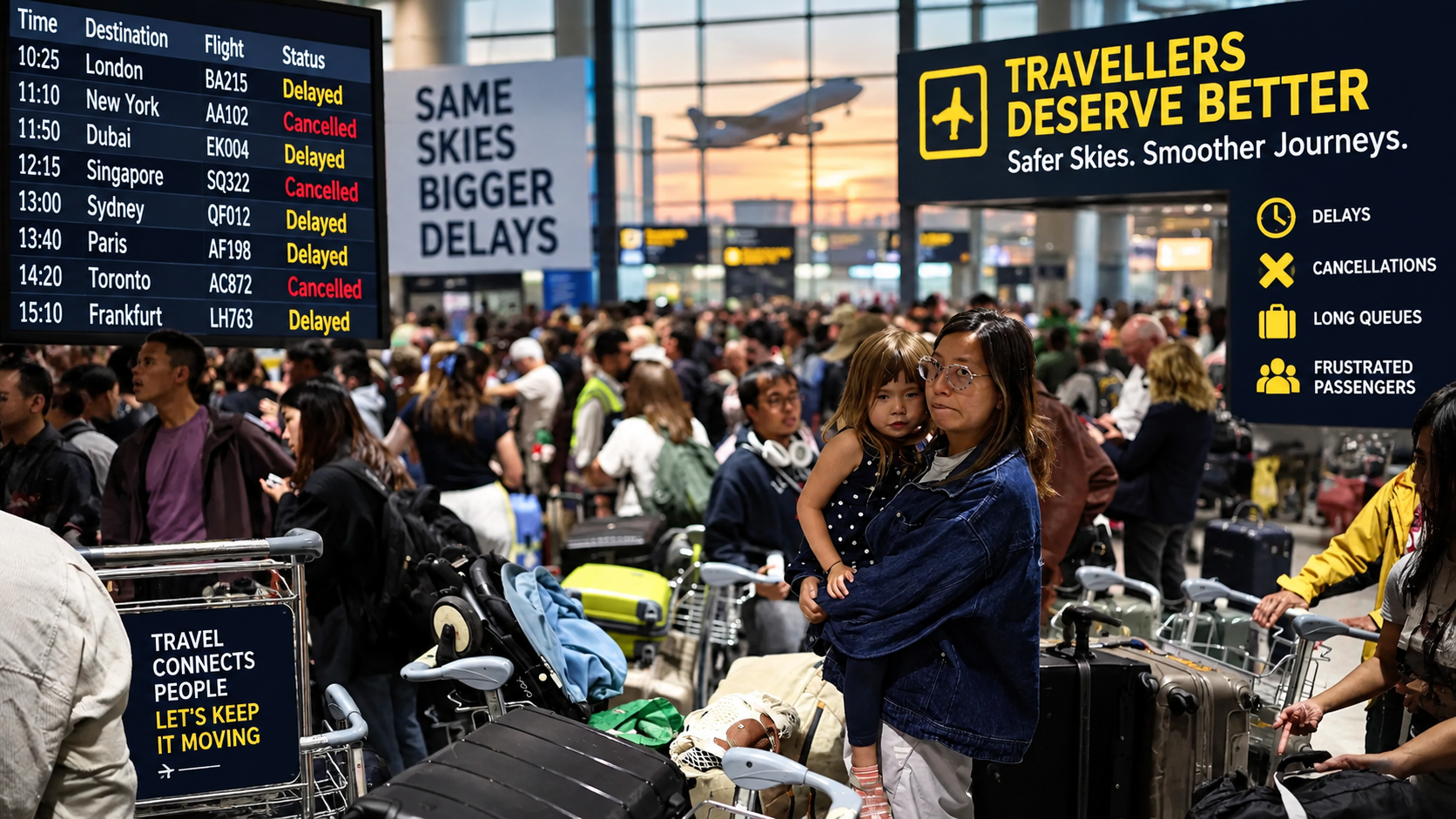
Airports can also experience operational challenges during severe weather, although the effects depend on the specific conditions.
Passengers planning summer travel should therefore keep an eye on official transport updates during periods of extreme heat.
Impact on Agriculture
Farmers can face a different set of challenges during prolonged hot weather.
Crops require sufficient water to maintain healthy growth.
Extended dry periods can increase irrigation requirements and place additional pressure on water resources.
Livestock can also experience heat stress.
Farmers may need to provide additional shade, water and ventilation during periods of extreme heat.
The effects of a heatwave can therefore extend beyond urban areas and affect the wider food-production system.
Water Demand During a Heatwave
Hot weather usually increases demand for water.
People use more water for drinking, gardens, swimming pools and other outdoor activities.
If a heatwave is accompanied by a prolonged lack of rainfall, reservoirs and groundwater supplies can come under pressure.
Water companies may therefore introduce restrictions if necessary.
The severity of any water shortage depends not only on temperature but also on rainfall levels before and during the hot period.
Wildfire Risk
Another important concern during prolonged hot and dry weather is wildfire.
Dry grass, vegetation and woodland can become easier to ignite.
A combination of high temperatures, low rainfall and strong winds can make fires spread more quickly.
Parts of the UK have experienced significant wildfire risks during periods of extreme summer weather.
People enjoying outdoor spaces should therefore follow local fire-safety guidance.
Discarded cigarettes, disposable barbecues and uncontrolled fires can create serious risks during dry weather.
UK Cities and the Urban Heat Island Effect
Cities can feel hotter than surrounding rural areas.
This is partly because buildings, roads and other surfaces absorb and retain heat.
At night, urban areas can therefore remain warmer than nearby countryside.
This phenomenon is known as the urban heat island effect.
London is a particularly important example because of its large population and extensive built environment.
During a heatwave, people living in densely developed areas may therefore experience greater nighttime discomfort.
Why Forecasting September Heat Is Difficult
One of the most important things to understand about a potential UK August to September heatwave is forecast uncertainty.
Weather forecasting becomes less precise the further into the future we look.
Meteorologists can identify broad patterns weeks ahead, but predicting the exact temperature on a specific day several weeks in advance is much more difficult.
A forecast indicating a possible warm period should therefore not automatically be interpreted as confirmation of a heatwave.
Short-range forecasts generally provide greater confidence.
This is why people should check official weather information regularly as the relevant dates approach.
Climate Change and UK Heatwaves
Climate change is an important part of the wider discussion surrounding extreme heat in the UK.
Global temperatures have increased significantly compared with historical averages.
As the climate warms, extreme heat events can become more likely and more intense.
The UK’s historically moderate climate means that infrastructure, buildings and public-health systems have often been designed around cooler conditions.
More frequent extreme heat can therefore create challenges for communities.
This does not mean that every hot spell is directly caused by climate change.
Weather events are influenced by many factors.
However, a warmer climate changes the background conditions under which extreme heat events occur.
August Heat Followed by September Cooler Weather
It is also possible for a hot August to be followed by a rapid change in September.
Atlantic weather systems can return quickly, bringing cloud, rain and cooler temperatures.
The transition from summer to autumn does not always happen gradually.
One week can feel distinctly summery while the next brings much cooler conditions.
This variability is a normal part of the UK’s climate.
Therefore, even if August experiences unusually high temperatures, it does not necessarily mean September will remain hot.
How to Follow Heatwave Developments
Anyone concerned about a potential UK August to September heatwave should rely on official weather information rather than social-media rumours.
Useful information can come from:
The Met Office
Local councils
UK health authorities
Transport operators
Water companies
Emergency services
Official sources are particularly important during extreme weather because conditions can change rapidly.
Weather apps can also be useful, but users should understand that long-range forecasts are less certain than short-term forecasts.
What Could a Late-Summer Heatwave Mean for the UK?
A prolonged period of hot weather in August could have a wide range of effects.
Tourism and outdoor businesses may benefit from increased demand.
Parks, beaches and tourist attractions could become busier.
At the same time, health services may face increased pressure from heat-related illness.
Farmers could face greater irrigation demands.
Water consumption could rise.
Wildfire risk could increase.
Transport infrastructure could experience additional stress.
These effects demonstrate why a heatwave is much more than a simple change in temperature.
Final Thoughts
The possibility of a UK August to September heatwave is an important weather topic as the country moves from late summer toward early autumn.
August is naturally one of the UK’s warmest months, and under the right atmospheric conditions, temperatures can rise considerably. September can also produce periods of unusually warm weather, although the approach of autumn generally brings shorter days and increasing opportunities for cooler Atlantic weather systems.
Whether a particular heatwave develops depends on several factors, including high-pressure systems, wind direction, continental air, cloud cover, humidity and rainfall patterns.
For the public, the most important consideration is preparation.
During prolonged hot weather, staying hydrated, avoiding excessive midday activity, keeping homes cool and checking on vulnerable people can reduce health risks.
Businesses, farmers, transport operators and local authorities may also need to prepare for the wider consequences of extreme heat.
At the same time, people should be cautious about long-range claims predicting exact temperatures weeks in advance. Weather patterns can change quickly, and a possible warm signal is not the same as a confirmed heatwave.
The best approach is to follow updated forecasts and official guidance as August and September progress.
For anyone planning holidays, outdoor events or travel, keeping an eye on weather developments can help with practical decisions.
The UK’s weather is famously unpredictable, but one thing is certain: late summer can still deliver significant heat, and September is not necessarily the end of warm-weather surprises.
As the UK moves through the final part of summer, the combination of changing atmospheric patterns and a warming climate means extreme heat will remain an important topic for weather watchers, travellers, businesses and households alike.
Frequently Asked Questions
Could the UK have a heatwave in September?
Yes. September can experience unusually warm conditions, although the likelihood and intensity depend on the atmospheric pattern at the time.
Why can the UK become very hot in August?
High pressure, clear skies, strong sunshine and warm air arriving from continental Europe can combine to produce very high temperatures.
Which parts of the UK are usually hottest during a heatwave?
Southern and southeastern England often experience some of the highest temperatures, although heat can spread across much of the country depending on the weather pattern.
Can a heatwave continue from August into September?
It is possible for a warm spell to cross the month boundary, but whether it happens depends on the persistence of the atmospheric conditions.
Is September normally hot in the UK?
September is generally cooler than July and August, but the UK can still experience warm or even unusually hot periods during the month.
Why are heatwaves dangerous?
Prolonged high temperatures can cause dehydration, heat exhaustion and heatstroke and can increase risks for vulnerable people.
How can I check whether a UK heatwave is developing?
Check updated forecasts and warnings from the Met Office and other relevant official authorities as the date approaches.
Does climate change affect UK heatwaves?
Climate change has increased the background temperature of the planet and can increase the likelihood and intensity of extreme heat events, although individual weather events have multiple contributing factors.
This website is proudly managed by Shunya Digit.