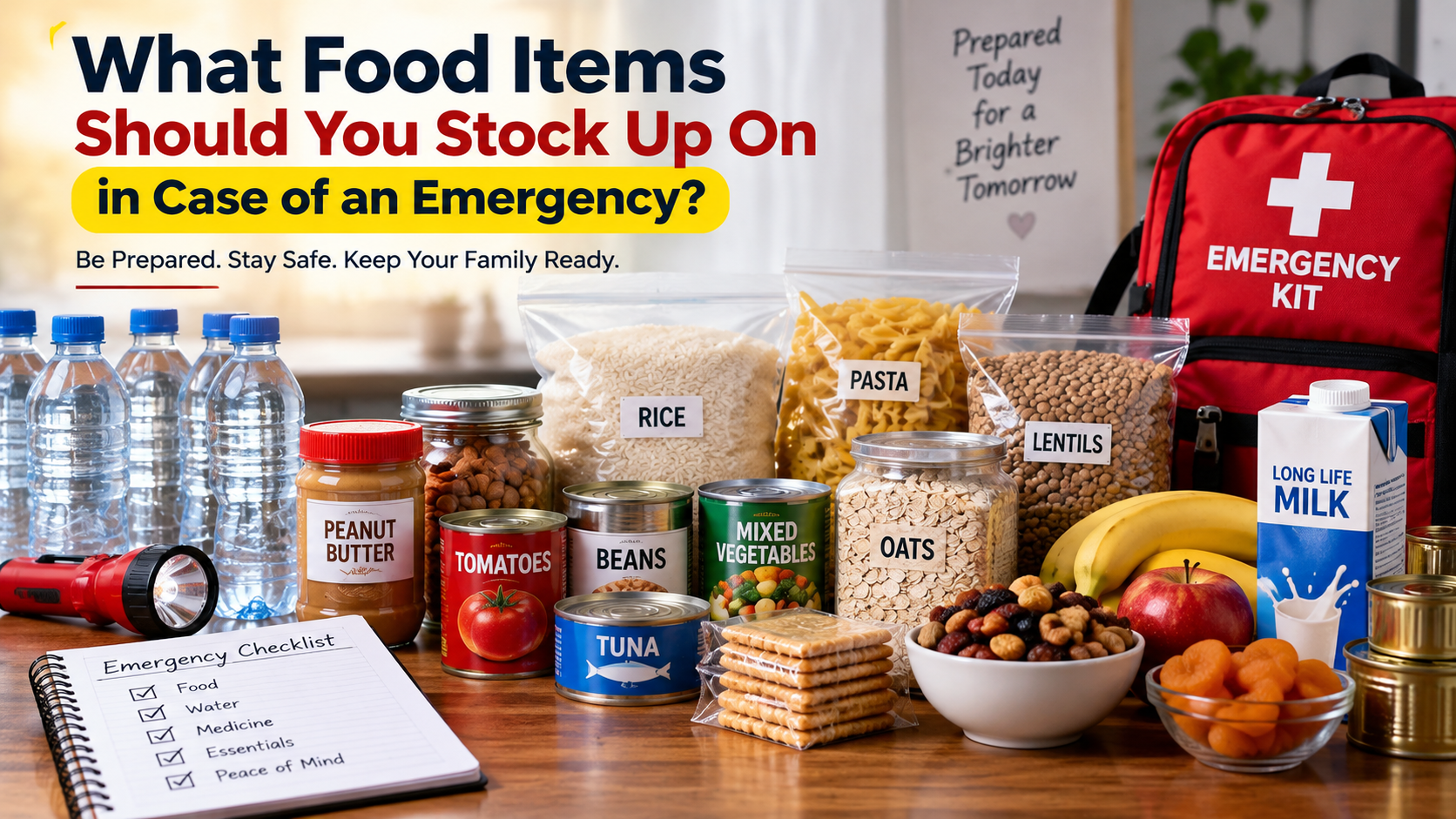
Emergencies can happen with little warning. Severe weather, power cuts, flooding, transport disruptions, natural disasters, water shortages or other unexpected events can make it difficult to visit a supermarket or order food online.
Having a basic emergency food supply at home can reduce stress and help your household manage for several days if normal routines are interrupted.
Emergency food storage does not mean filling every cupboard with huge quantities of groceries. The aim is to create a practical supply of foods that are nutritious, easy to store, familiar to your family and, ideally, simple to prepare.
The best emergency foods are generally shelf-stable products that can be stored safely for long periods. It is also useful to include foods that can be eaten without cooking in case electricity, gas or other cooking facilities are unavailable.
So, what food items should you stock up on in case of an emergency?
From rice and pulses to canned foods, dry fruits, ready-to-eat meals and special dietary products, there are many sensible options to consider.
1. Rice
Rice is one of the most useful staples for an emergency food supply.
It is versatile, easy to combine with other ingredients and can provide a substantial meal when paired with pulses, canned vegetables or other shelf-stable foods.
White rice generally stores well when kept in a cool, dry and properly sealed environment.
Families can choose the type of rice they normally eat rather than purchasing something unfamiliar simply because it is marketed as an emergency product.
Rice can be used for simple meals such as:
- Rice and dal
- Khichdi
- Fried rice
- Rice with canned vegetables
- Rice with shelf-stable sauces or other accompaniments
Keep in mind that rice normally requires cooking, so households should also maintain foods that can be eaten without electricity or gas.
2. Pulses, Lentils and Beans
Pulses are excellent emergency staples because they are versatile and provide useful nutritional value.
Dry lentils, chickpeas, kidney beans and other pulses can be stored for extended periods when kept away from moisture.
Canned beans are another convenient option because they generally require much less preparation.
Pulses can be combined with rice, pasta, canned vegetables or flatbreads to create filling meals.
For households that already cook with dal regularly, stocking familiar varieties can make emergency meal planning much easier.
3. Canned Foods
Canned foods are among the most practical emergency supplies.
They are shelf-stable, relatively easy to store and can often be eaten with minimal preparation.
Useful canned foods can include:
- Canned beans
- Canned vegetables
- Canned fruit
- Canned fish
- Soups
- Tomato products
- Ready-to-eat meals
Choose cans that your household is likely to consume rather than buying products that will sit untouched until they expire.
Always check packaging for damage, swelling, leaking or unusual bulging before use.
4. Ready-to-Eat Foods
During an emergency, cooking may not always be possible.
This is why ready-to-eat foods deserve a place in your emergency cupboard.
Examples include:
- Ready-to-eat meals
- Shelf-stable curries
- Packaged meals
- Crackers
- Dry snacks
- Canned foods
- Nut butter
- Energy bars
These foods can be especially useful during power cuts or situations where cooking facilities are temporarily unavailable.
A combination of ready-to-eat and cookable foods provides greater flexibility.
5. Pasta and Noodles
Pasta and noodles are convenient pantry staples because they are compact, versatile and easy to combine with other ingredients.
Pasta can be paired with canned tomato sauce, canned vegetables, beans or shelf-stable seasonings.
Instant noodles can also provide a quick meal, although they should be considered one part of an emergency food supply rather than the entire plan.
Because many instant noodles can be high in sodium, balance them with other foods where possible.
6. Flour and Long-Lasting Grains
Depending on your cooking habits, flour can also be useful.
Wheat flour, oats, cornmeal and other grains can provide additional meal options.
For households that regularly prepare chapatis, rotis or other flatbreads, maintaining an appropriate quantity of flour can be practical.
However, flour can have a shorter storage life than some highly processed shelf-stable products, so proper storage and stock rotation are important.
7. Oats
Oats are a simple emergency breakfast option.
They can be prepared with milk or water and combined with ingredients such as:
- Dried fruit
- Nuts
- Seeds
- Peanut butter
- Honey
- Powdered milk
For emergencies where cooking is difficult, some oat products can also be prepared with minimal heating or soaking, depending on the product.
Because breakfast is often overlooked in emergency planning, keeping an easy morning option can be useful.
8. Peanut Butter and Other Nut Butters
Nut butter is a convenient pantry item because it is calorie-dense, easy to use and requires little preparation.
It can be spread on bread or crackers or eaten alongside fruit.
Peanut butter is especially useful for households looking for quick foods during an emergency.
People with nut allergies should choose suitable alternatives such as seed butter where appropriate.
9. Dry Fruits
Dried fruit is another useful item for emergency food storage.
Raisins, dates, dried apricots and similar products are compact and convenient snacks.
They can also be added to oats, cereal or other foods.
Because they are easy to carry, dried fruits can be useful if a household needs to leave home temporarily.
10. Nuts and Seeds
Nuts and seeds can provide a convenient snack while also adding variety to an emergency food supply.
Useful options include:
- Almonds
- Peanuts
- Walnuts
- Cashews
- Pumpkin seeds
- Sunflower seeds
Store them in airtight containers and pay attention to shelf life because high-fat foods can eventually become rancid.
11. Crackers and Biscuits
Crackers are among the simplest no-cook emergency foods.
They can be eaten with peanut butter, canned foods, cheese products that do not require refrigeration or other shelf-stable accompaniments.
Plain biscuits can also provide a quick source of energy.
Choose products your household actually likes because emergency stock is more useful when people are willing to eat it.
12. Breakfast Cereals
Breakfast cereals can be useful when refrigeration or cooking is limited.
They can be eaten with shelf-stable milk, powdered milk or another suitable alternative.
Choose cereals with reasonable nutritional value rather than relying entirely on highly sugary products.
Whole-grain options can provide more variety and may be more filling.
13. Shelf-Stable Milk
Milk can be difficult to store during a power outage because fresh milk requires refrigeration.
Shelf-stable milk can therefore be useful in an emergency pantry.
Powdered milk is another practical option because it is compact and can be mixed with water when needed.
This can be especially useful for households with children.
14. Canned Fish and Other Protein Sources
Canned fish such as tuna, sardines and other varieties can provide a convenient source of protein.
They can be eaten with crackers, bread, rice or salads when fresh ingredients are unavailable.
Vegetarian households can instead stock canned beans, lentils, chickpeas, nut butter and other plant-based options.
The goal is to maintain variety rather than depending on a single food type.
15. Shelf-Stable Fruits and Vegetables
Fresh fruits and vegetables are important parts of a normal diet, but they may be difficult to maintain during certain emergencies.
Canned fruits and vegetables can help add variety.
Other options include:
- Dried fruit
- Dehydrated vegetables
- Vegetable powders
- Shelf-stable fruit cups
Choose products that fit your household’s normal eating habits.
16. Baby Food and Infant Supplies
Households with babies need a separate emergency food plan.
This may include:
- Infant formula
- Baby food
- Baby cereal
- Appropriate feeding supplies
Parents should store enough of the products their baby already uses rather than relying on unfamiliar alternatives.
It is also important to consider how feeding will work if electricity, clean water or refrigeration becomes unavailable.
17. Food for Older Adults
Older family members may have specific dietary requirements.
Emergency food supplies should take into account any foods that are normally recommended or preferred.
Soft foods, easy-to-open packaging and familiar meals can be particularly useful for some older adults.
Families should consider individual needs rather than assuming that one emergency food list works for everyone.
18. Food for People With Dietary Restrictions
A household emergency stock should reflect allergies, medical diets and personal dietary choices.
If someone in the family is vegetarian, vegan, gluten-free or allergic to specific foods, make sure the emergency supply includes suitable alternatives.
This is particularly important because emergency situations may make replacement shopping difficult.
19. Pet Food
Pets are part of the household and need emergency planning too.
Keep an appropriate supply of their normal food, along with any special dietary products they require.
Dry pet food is generally convenient to store, while canned options may also be useful.
Do not forget to consider fresh water for pets as part of your wider emergency plan.
20. Snacks for Children
Children may find emergencies stressful, and familiar foods can provide comfort.
Keep a selection of child-friendly shelf-stable snacks such as:
- Crackers
- Cereal bars
- Dried fruit
- Biscuits
- Shelf-stable drinks
- Nut or seed butter where appropriate
Having familiar snacks available can also make it easier to maintain some normality during a disruption.
21. Salt, Sugar and Basic Seasonings
Basic seasonings may not seem important during an emergency, but they can make simple foods more enjoyable.
Consider storing:
- Salt
- Sugar
- Cooking oil
- Basic spices
- Stock cubes
- Sauces
- Honey
These items can make rice, pasta, grains and canned foods much less repetitive.
22. Water Is Just as Important as Food
When preparing an emergency supply, food should not be considered separately from water.
People can survive much longer without food than without adequate hydration, so safe drinking water should be a core part of emergency planning.
Water may also be needed for cooking, hygiene, medicines and other essential tasks.
The exact amount required depends on factors such as household size, climate, age and emergency conditions.
Store water safely and consider how you would manage if normal water services were interrupted.
23. How to Store Emergency Food Properly
Buying emergency food is only the first step.
Proper storage is equally important.
Keep food in a location that is:
- Cool
- Dry
- Clean
- Away from direct sunlight
- Protected from pests
Where appropriate, use airtight containers to protect dry foods from moisture and insects.
Avoid storing food directly on damp floors.
24. Rotate Your Emergency Stock
One of the biggest mistakes people make is buying emergency food and forgetting about it.
Instead, use a rotation system.
When you buy new supplies, place older products where they will be used first.
Then replace them with newer products.
This ensures that food does not remain forgotten until it expires.
You can think of emergency storage as an extension of your normal pantry rather than a separate collection of untouched products.
25. Don’t Buy Food You Will Never Eat
Emergency preparedness becomes easier when the food supply reflects your normal diet.
If your family never eats a particular canned meal, buying ten boxes of it may not be useful.
Choose foods that people already know and enjoy.
Familiar food can reduce stress during emergencies and makes stock rotation much easier.
Conclusion
Preparing an emergency food supply does not have to be complicated.
A practical pantry can include rice, pulses, canned foods, pasta, oats, crackers, dried fruit, nuts, nut butter, shelf-stable milk, ready-to-eat meals and other products your household regularly consumes.
The most important principle is variety.
Include foods that provide energy, protein and different types of nutrients, along with options that require little or no cooking.
Remember to account for children, older adults, people with dietary restrictions and pets.
Food storage should also be combined with a reliable supply of drinking water and other emergency essentials.
Most importantly, maintain the supplies rather than buying them once and forgetting about them.
Check expiry dates, rotate older products into normal meals and replace what you use.
An emergency food stock is not about expecting the worst every day.
It is about being prepared enough that, when an unexpected disruption happens, your household has one less thing to worry about.
A well-organised pantry can provide flexibility, reduce stress and help your family maintain basic nutrition while normal shopping and cooking routines are temporarily unavailable.
Frequently Asked Questions
What food should I stock up on for an emergency?
Useful options include rice, pulses, canned foods, pasta, oats, crackers, dried fruit, nuts, nut butter, shelf-stable milk and ready-to-eat meals.
What are the best no-cook emergency foods?
Canned foods, crackers, nut butter, dried fruit, nuts, cereal bars and ready-to-eat meals can be useful when cooking is not possible.
How long can emergency food be stored?
Storage life varies significantly by product. Always follow the manufacturer’s expiry or best-before guidance and store food in suitable conditions.
Should I stock food that my family does not normally eat?
It is generally more practical to choose familiar foods your household already enjoys. This makes the supply easier to rotate and use before it expires.
Should I include baby food in an emergency supply?
Yes. Households with infants should plan specifically for their baby’s normal feeding requirements.
Should pet food be included in emergency planning?
Yes. Pets also need food and water during an emergency, so their normal supplies should be included in household planning.
Is water more important than food during an emergency?
Safe drinking water is a critical part of emergency preparedness and should be planned alongside food supplies.
How often should I check my emergency food stock?
Check it regularly so that expired or damaged items can be replaced and older products can be used as part of normal meals.
What is the best way to store emergency food?
Keep food in a cool, dry, clean location away from direct sunlight, moisture and pests, following any storage instructions on the packaging.
This website is proudly managed by Shunya Digit.