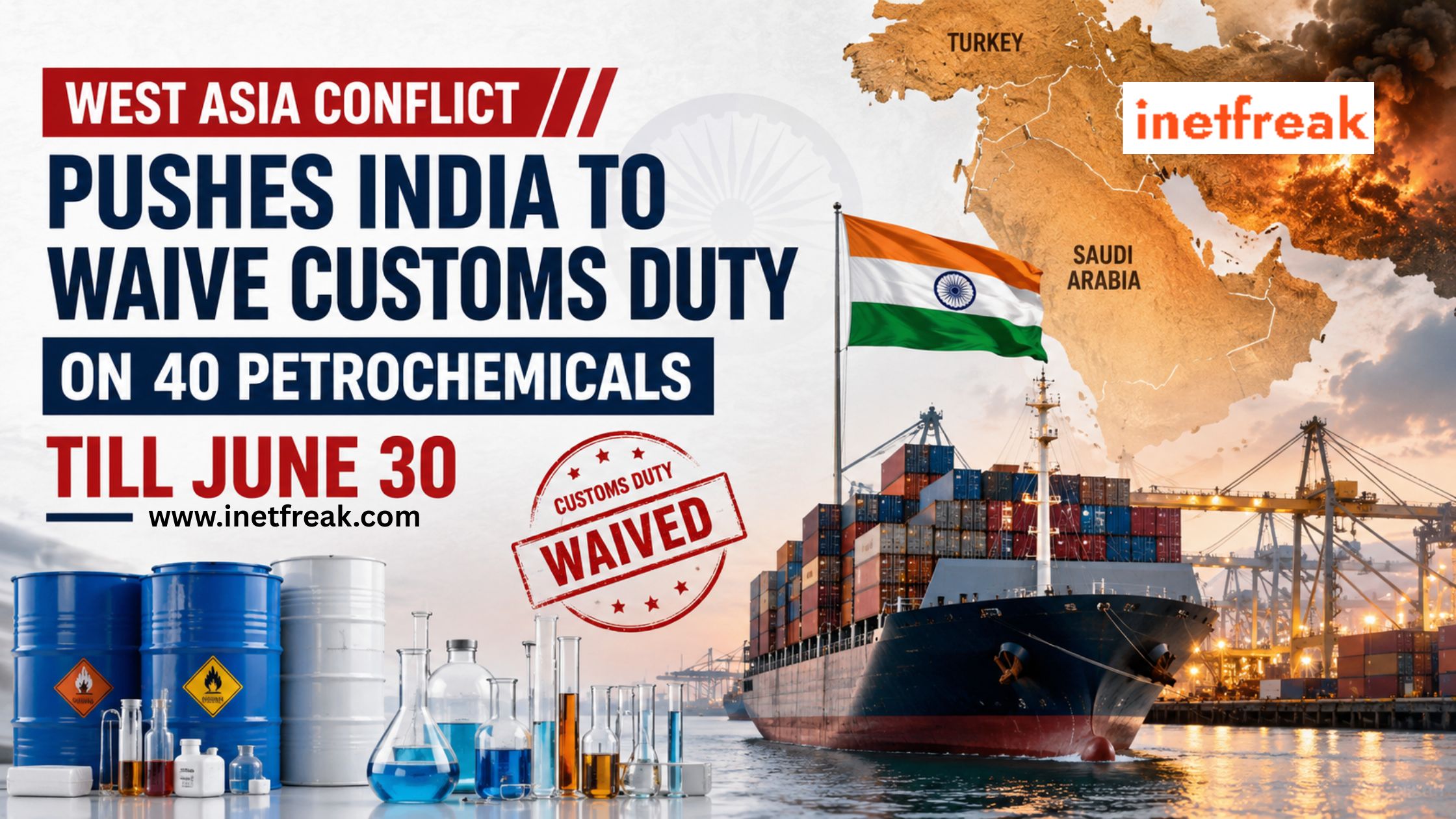
India has taken a major economic step in response to growing uncertainty caused by the ongoing West Asia conflict. In a move aimed at protecting domestic industries from rising raw material costs and supply disruptions, the government has temporarily waived customs duty on 40 petrochemical products until June 30.
The decision comes at a critical time when global energy markets are witnessing volatility due to geopolitical tensions in the Middle East. Since India imports a significant portion of its petrochemical requirements, even minor disruptions in global shipping routes or crude oil supply chains can impact manufacturing costs across sectors.
The customs duty waiver on petrochemicals is expected to provide relief to industries such as plastics, packaging, textiles, paints, pharmaceuticals, automobiles, and chemicals. But beyond short-term relief, the move also signals how governments are preparing for possible long-term supply chain disruptions linked to the West Asia conflict.
India’s Customs Duty Waiver Explained
The Indian government has temporarily removed customs duty on 40 petrochemical items to ensure uninterrupted industrial production and stabilize prices in the domestic market.
This exemption will remain effective until June 30 and applies to several raw materials and intermediates used heavily across manufacturing sectors.
The decision was reportedly taken after concerns emerged regarding:
- Rising crude oil prices
- Supply chain uncertainty
- Increased freight costs
- Potential shipping disruptions in the Red Sea region
- Pressure on domestic manufacturing costs
Petrochemicals are among the most important industrial raw materials in modern economies. Any sudden increase in import costs directly affects product pricing across multiple industries.
Why the West Asia Conflict Matters for India
Rising Geopolitical Tensions
West Asia remains one of the world’s most critical energy-producing regions. Escalating tensions in the area have increased fears of supply disruptions and trade instability.
India depends heavily on imports for crude oil, LNG, and several petrochemical feedstocks. If shipping routes become unsafe or oil prices spike sharply, domestic industries may face serious cost pressures.
Impact on Global Oil Prices
Whenever geopolitical instability affects oil-producing nations, global crude prices tend to rise rapidly. Since petrochemicals are derived from petroleum products, their pricing is closely linked to oil markets.
Analysts believe the government’s decision is a preventive measure designed to reduce the inflationary impact on Indian industries.
Which Industries Will Benefit Most?
Plastics and Packaging Industry
The plastics industry is among the biggest beneficiaries of this customs duty exemption.
Manufacturers using imported petrochemical resins and polymers may now experience lower production costs, helping stabilize prices of packaging materials, consumer goods, and industrial plastics.
Textile and Synthetic Fiber Sector
Synthetic fibers like polyester rely heavily on petrochemical derivatives. Lower import costs could help textile exporters remain competitive in international markets.
This is particularly important as Indian textile manufacturers are already dealing with weak global demand and pricing pressure.
Automobile Industry
Modern vehicles use several petrochemical-based components, including:
- Plastic interiors
- Rubber materials
- Synthetic fibers
- Paints and coatings
Reducing raw material costs may help automakers manage pricing pressures more effectively.
Pharmaceutical and Chemical Companies
Several pharmaceutical products and specialty chemicals rely on imported petrochemical intermediates. Duty relief may improve production economics and ease operational pressure.
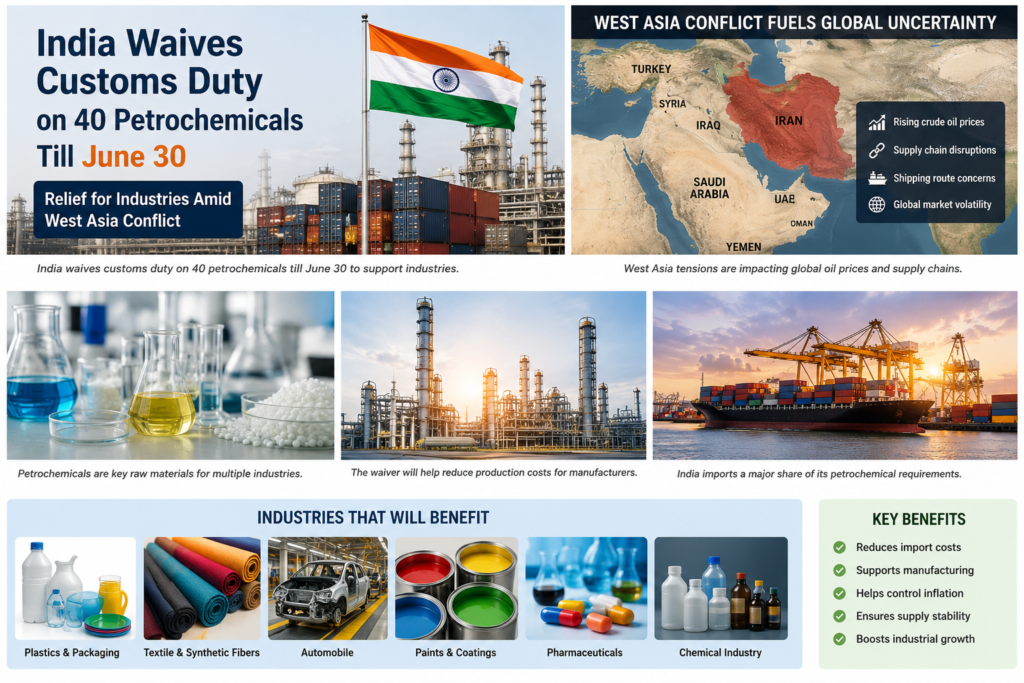
Key Highlights of the Government Decision
- Customs duty waived on 40 petrochemical products
- Exemption valid till June 30
- Decision linked to West Asia geopolitical tensions
- Aims to stabilize domestic manufacturing costs
- Expected relief for plastics, textiles, auto, and chemical industries
- Helps reduce inflationary pressure on industrial goods
Petrochemicals Included Under the Waiver
While the complete official list includes multiple industrial chemicals and feedstocks, some commonly used categories reportedly include:
- Polymer materials
- Petrochemical intermediates
- Synthetic raw materials
- Specialty industrial chemicals
- Industrial-grade compounds used in manufacturing
The government may revise or extend the list depending on global developments.
How This Move Could Affect Consumers
Stable Product Pricing
One major advantage of reducing import duty is price stability.
If industries can import raw materials at lower costs, companies may avoid passing additional expenses to consumers immediately.
Products that could see reduced inflationary pressure include:
- Packaged goods
- Household plastics
- Paint products
- Automobile components
- Synthetic clothing materials
Supply Chain Stability
The waiver also reduces the risk of manufacturing slowdowns caused by rising input costs.
This is especially important for export-oriented sectors competing globally.
Expert Analysis: Temporary Relief or Long-Term Strategy?
Industry experts believe the move is both strategic and precautionary.
According to market analysts, India is attempting to shield domestic manufacturing from external geopolitical shocks before the situation worsens.
Some economists argue that temporary import duty cuts can:
- Prevent panic pricing
- Maintain industrial confidence
- Support exports
- Reduce inflation risks
- Improve supply availability
However, experts also warn that if the West Asia conflict intensifies further, India may need additional economic interventions, especially in fuel pricing and industrial subsidies.
Comparison With Previous Government Interventions
This is not the first time India has adjusted import duties during global uncertainty.
In previous years, the government introduced similar temporary measures during:
- COVID-19 supply chain disruptions
- Crude oil price spikes
- Inflationary commodity cycles
- Fertilizer shortages
- Semiconductor crises
Such measures are generally designed to provide immediate relief while policymakers monitor international developments.
Pros and Cons of the Customs Duty Waiver
Pros
- Reduces industrial raw material costs
- Helps stabilize inflation
- Supports manufacturing sectors
- Improves supply chain continuity
- Encourages smoother imports
Cons
- Temporary revenue loss for the government
- Relief is short-term only
- Global oil volatility may continue
- Benefits may not immediately reach consumers
Expected Market Impact
Positive Signals for Manufacturing
Industry associations have largely welcomed the decision.
Several manufacturing sectors believe the move will improve operational predictability during uncertain global conditions.
Impact on Stock Market Sectors
Companies involved in:
- Chemicals
- Petrochemicals
- Packaging
- Textiles
- Industrial manufacturing
could benefit sentimentally from reduced raw material pressures.
Important Features of the Policy Move
| Feature | Details |
|---|---|
| Policy Type | Temporary Customs Duty Waiver |
| Products Covered | 40 Petrochemicals |
| Validity | Till June 30 |
| Main Objective | Reduce industrial cost pressure |
| Trigger | West Asia conflict and global uncertainty |
| Major Beneficiaries | Plastics, textiles, chemicals, auto |
FAQ SECTION
Why did India waive customs duty on petrochemicals?
India removed customs duty temporarily to protect industries from rising costs caused by the West Asia conflict and global supply chain uncertainty.
How long will the customs duty waiver remain active?
The exemption is currently valid until June 30.
Which industries will benefit the most?
Plastics, textiles, chemicals, packaging, pharmaceuticals, and automobile industries are expected to benefit significantly.
Will this reduce prices for consumers?
The move may help stabilize prices indirectly by lowering manufacturing costs, although immediate consumer price reductions are unlikely.
What is causing the West Asia conflict concern?
Rising geopolitical tensions in the Middle East are creating fears of oil supply disruptions and higher global energy prices.
Could the government extend the waiver?
If global instability continues, the government may consider extending the temporary exemption period.
CONCLUSION
India’s decision to waive customs duty on 40 petrochemical products highlights how deeply global geopolitical tensions can influence domestic economic policy. As the West Asia conflict continues to create uncertainty in energy and trade markets, governments worldwide are preparing defensive measures to protect industries and consumers.
For India, this move serves as both an economic cushion and a strategic signal. By reducing import costs temporarily, the government aims to maintain industrial stability, prevent excessive inflation, and support key manufacturing sectors during a volatile period.
The coming weeks will be crucial. If tensions escalate further, additional economic interventions may follow. Until then, industries are likely to welcome this short-term relief as they navigate an increasingly unpredictable global environment.
Stay updated with the latest business, technology, and global economic news only on Inetfreak.com.