
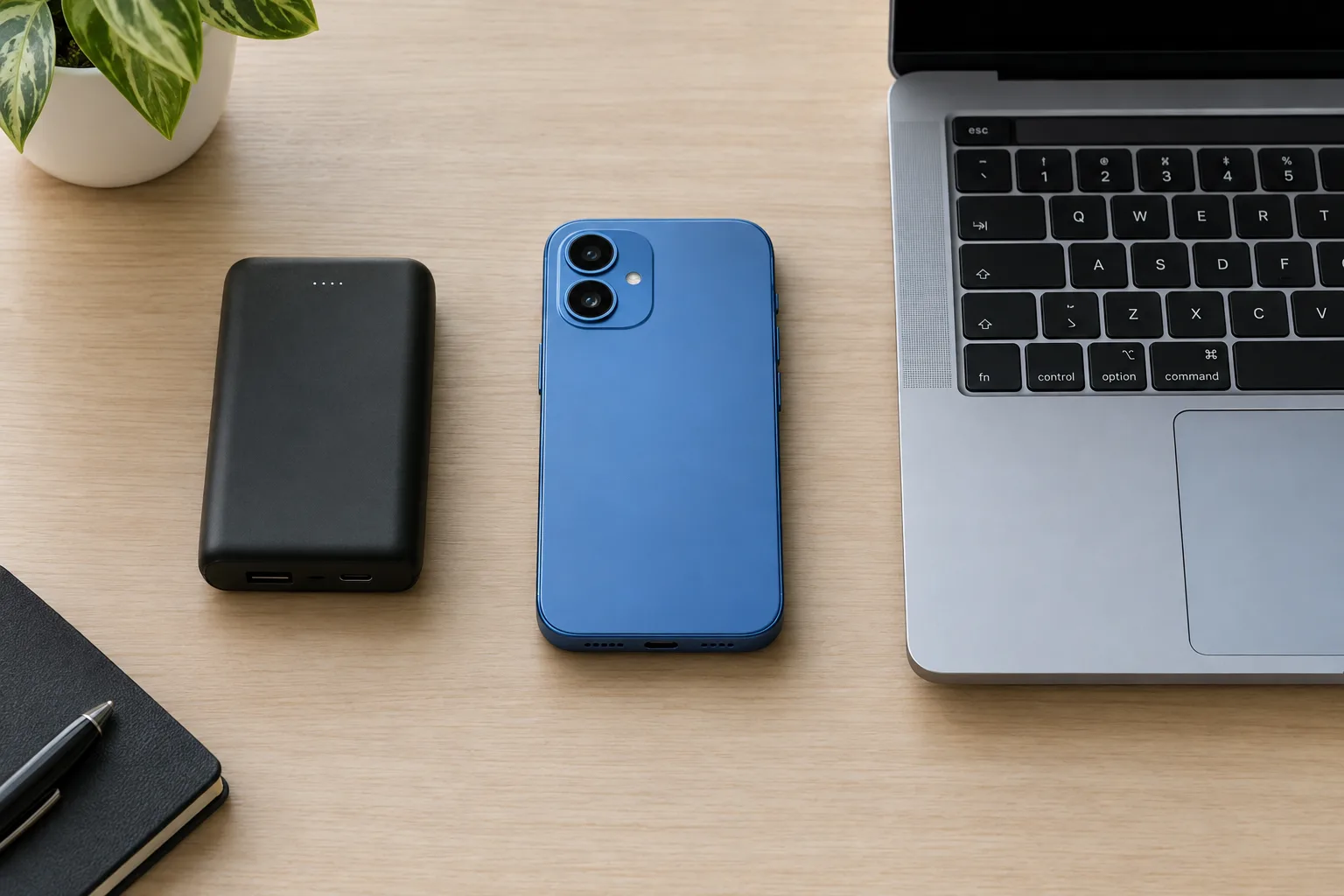
Choosing a new smartphone in late autumn 2026 is not simply about picking the newest model or the most famous brand. The right phone should match the way you actually use it, fit comfortably in your hand and pocket, offer enough performance for several years, and stay within a realistic budget before Black Friday, Cyber Monday and Christmas shopping begin.
Start With Your Real Smartphone Use, Not the Brand
Before comparing specifications, describe your daily smartphone habits. Many buyers begin with a brand name, but this can lead to paying for features they rarely use. A better approach is to decide what matters most: one-handed comfort, streaming, photography, gaming, work apps, communication or reliable use as a Christmas gift.
For example, someone who mainly reads messages, checks public transport, takes occasional photos and makes calls may not need a premium processor or a large amount of storage. A well-designed mid-range phone could be more than fast enough and provide better value. On the other hand, a user who edits video, plays demanding games or manages several work accounts will benefit from a stronger chip, more RAM and faster storage.
Write down your five most frequent phone activities. Include the apps you use every day, not only the features you might use once a month. If your list includes banking, navigation, video calls and work authentication, long-term software support may be more important than a high camera zoom rating.
Photography needs also vary considerably. A parent taking indoor photos of children may value a fast camera, good low-light processing and dependable autofocus. A traveller may prefer a versatile ultra-wide camera, strong battery life and a bright display. A social media user may care more about front-camera quality and stable video than about a high megapixel count.
Gift shopping adds another layer. If you are buying a phone for Christmas, check the recipient’s current operating system, preferred screen size and existing accessories. A person who already owns wireless earbuds, a smartwatch or a laptop from one ecosystem may appreciate a compatible phone more than a technically superior alternative.
For a broader view of which brands are currently strong in the market, see which smartphones dominate sales in 2026 and why they win. Sales popularity is useful context, but it should not replace your own requirements.
Choosing the Right Screen Size and Phone Design
Screen size affects much more than how large videos appear. It also influences the phone’s height, width, weight, battery capacity and ease of use. In general, compact phones are easier to carry and operate with one hand, standard models offer the best balance, and large phones provide more room for media, gaming and multitasking.
A compact model can be a good choice if you often use your phone while walking, commuting or carrying shopping bags. It is easier to reach the top corner of the display with one thumb and usually fits smaller pockets. The compromise is that typing may feel less comfortable, and the battery may be smaller because there is less internal space.
Standard-sized phones are suitable for many people. They offer enough display area for navigation, social media, video calls and office apps without becoming too difficult to hold. For most buyers, this category is the safest starting point, especially when choosing a phone for a family member whose preferences are not completely clear.
Large-screen phones are useful for streaming, gaming, document reading and split-screen work. They can also be easier for people who prefer larger text. However, a phone that looks impressive in a shop may feel heavy after several hours. Check both weight and thickness, not just the diagonal screen measurement.
Autumn and winter conditions also matter. In November and December, you may use your phone while wearing a coat, gloves or thicker clothing. A device that is just manageable in a warm shop can become awkward when your hands are cold. Consider whether you can unlock it, answer a call and take a quick photo without removing your gloves or using both hands.
Curved displays can look attractive, but they may be more vulnerable to accidental touches and more expensive to repair. Flat screens are usually easier to protect with a case and screen protector. Foldable phones offer a compact closed size or a larger inner display, but their hinges, weight and long-term durability deserve closer inspection.
Do not forget ergonomics. Try holding a phone in one hand, reaching the notification shade, pressing the volume buttons and typing a short message. A case will add extra width and weight, so leave room for it when judging comfort. The ideal phone is not necessarily the smallest or largest model; it is the one you can use naturally every day.
How Much Performance Do You Actually Need in 2026?
Smartphone performance is important, but benchmark scores do not tell the entire story. In 2026, even many mid-range phones can handle messaging, browsing, video streaming, photography and everyday productivity smoothly. The difference becomes more noticeable with demanding games, high-resolution video editing, advanced camera processing and heavy multitasking.
The processor affects app opening speed, gaming performance, image processing and battery efficiency. Look for a recent chip with a good reputation for sustained performance rather than focusing only on the highest peak speed. A phone that stays cool and consistent during long use can feel better than one that is faster for a few minutes but becomes hot and slows down.
RAM matters when you switch between several apps. For everyday use, a sensible amount of modern RAM is usually enough, while heavier users should choose a configuration that gives more space for games, editing tools and work apps. Be cautious with marketing terms such as virtual RAM, because borrowed storage is not a full replacement for physical memory.
Storage is one of the most important decisions because many phones no longer offer a memory card slot. If you take frequent photos, record video, download offline entertainment or install large games, the basic storage option may become restrictive. Paying for a larger capacity at purchase can be cheaper and more convenient than replacing a phone early.
A smooth display is also useful. A higher refresh rate can make scrolling and animations look more fluid, but it may use more energy. Check whether the phone can automatically reduce or increase the refresh rate. Display brightness is especially important in winter daylight, while colour quality and viewing angles matter for streaming and photo review.
Camera quality depends on sensors, lenses and software processing. Do not judge a camera by megapixels alone. Check sample photos in daylight, indoors and at night. Look for consistent skin tones, stable video, quick focusing and natural detail. A phone with two genuinely useful cameras may be more practical than one with several weak sensors.
Software support should be part of the performance calculation. A phone that receives security updates and operating system upgrades for many years can remain useful longer, even if its processor is not the fastest. Ask how long updates are promised, how quickly they arrive and whether the manufacturer has a reliable history of delivering them.
For a typical user, a balanced phone with a dependable processor, sufficient RAM, comfortable storage and long software support is often a better purchase than a premium model built mainly for gaming. Pay for performance when you can explain exactly what you will do with it.
Setting a Realistic Smartphone Budget
Your smartphone budget should include the complete ownership cost, not only the price printed on the box. A case, screen protector, charger, insurance, extended warranty and possible storage upgrade can change the final amount. This is particularly important during autumn promotions, when a lower headline price may apply only to a limited configuration.
Entry-level phones are suitable for calls, messaging, light browsing, social media and basic photography. They can be a sensible choice for children, older relatives or users who prefer simple devices. Expect some compromises in camera quality, display brightness, charging speed, gaming performance and update length.
Mid-range phones usually offer the strongest balance for most buyers. They can provide bright displays, capable cameras, solid battery life and enough speed for everyday apps. The difference between a good mid-range model and a premium phone may be smaller than expected for ordinary use, especially if you do not play demanding games or record professional video.
Premium phones are aimed at people who want the best displays, advanced cameras, high-end materials, powerful processors or a long support period. They may also offer features such as stronger water resistance, wireless charging, better speakers and more refined design. However, the extra cost is worthwhile only if you will use those advantages for several years.
When comparing Black Friday and Cyber Monday offers, check the original price, exact model number, storage capacity and seller reputation. A discount on an older phone may be less attractive than a smaller discount on a newer model with longer support. Also check whether the package includes a charger, because this can add to the real cost.
Trade-in offers may reduce the purchase price, but compare the guaranteed value with the final value after inspection. Back up your old phone, remove personal accounts and confirm when payment or credit will be issued. Warranty coverage is equally important. A bargain from an unclear marketplace may create problems if the device is intended as a Christmas present.
Think about value over time. A phone costing more but lasting four or five years can be cheaper per year than a very cheap model that needs replacement after two years. Battery replacement availability, repair prices and software support all influence this calculation.
A Practical Shortlist and Pre-Purchase Checklist
Once you know your priorities, narrow the choice to three phones. One should be your best overall match, one can be a cheaper alternative, and the third can offer a useful premium feature. Avoid comparing ten models at once, because small specification differences can make the decision more confusing rather than more accurate.
Compare the three phones in a simple table. Record the screen size and weight, battery capacity, charging method, camera performance, storage, update promise, water resistance and connectivity. Check support for the mobile networks you use, including 5G bands, dual SIM or eSIM capability, Wi-Fi standards and Bluetooth compatibility.
Battery capacity is only part of the story. Read independent tests that measure screen-on time and mixed daily use. A smaller battery paired with an efficient processor can last longer than a larger battery inside a power-hungry phone. Fast charging is convenient, but long-term battery health and charger availability also matter.
Before buying, test the final model in person if possible. Hold it, open the camera, type a message, inspect the display and check whether the fingerprint reader or face unlock works comfortably. If the phone is a Christmas gift, confirm the return period so the recipient can exchange it if the size or operating system is unsuitable.
Make sure the deal is truly complete. Check the storage version, colour, warranty, delivery date, return conditions and whether the phone is new, refurbished or imported. During the busy December period, allow enough time for delivery, setup and data transfer instead of waiting until Christmas Eve.
After purchase, update the phone, enable screen protection, set up secure authentication and create a backup. If you are giving it as a gift, keep the receipt and avoid opening sealed packaging unless necessary. A little preparation prevents many common problems after the holidays.
Bottom Line
The best new smartphone in 2026 is not automatically the most expensive or the most powerful. Choose the size you can comfortably use, the performance your apps genuinely require and the storage you will not quickly outgrow. Then compare software support, battery life, camera quality, durability and the full cost of ownership.
A balanced mid-range phone will satisfy many people, while a premium model makes sense for demanding photography, gaming, creative work or long-term use. By starting with your real habits and checking the final deal carefully, you can make a confident purchase for yourself or choose a practical Christmas gift without being distracted by unnecessary specifications.
Looking for more practical technology advice before the holiday shopping season?

One thought on “How to Choose a New Smartphone by Size, Performance and Price in 2026”