
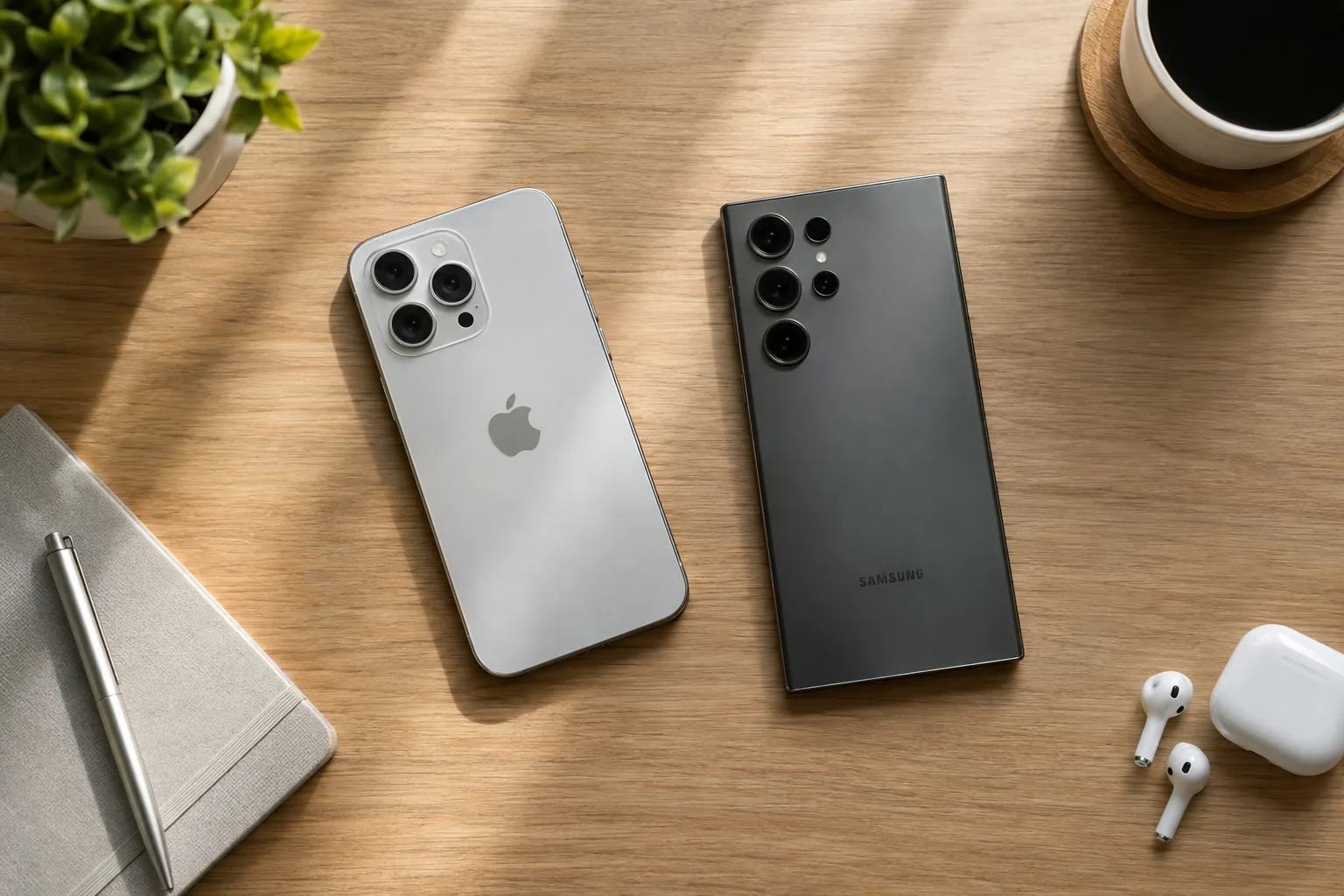
Which Smartphones Dominate Sales in 2026—and Why They Win
The smartphone market in 2026 is not controlled by one simple ranking. Apple may lead in revenue, Samsung may remain one of the strongest global sellers, Xiaomi can win through value, and other Chinese brands are gaining ground in selected regions. To understand the real winners, you must separate units shipped, market share, retail sell-through and money earned.
That distinction matters even more in the autumn shopping season. New phone launches, Black Friday discounts and Christmas gift buying can quickly change which models appear at the top of retailer charts. A phone that sells fewer units can still be commercially more successful if it generates much higher profit and revenue. This guide explains what is driving smartphone sales in late 2026 and how to judge the market beyond noisy headlines.
The Smartphone Brands Leading Sales in 2026
Global smartphone rankings in 2026 continue to be shaped by a small group of powerful brands, but their strengths are different. Apple remains exceptionally strong in premium markets because the iPhone combines brand loyalty, long software support, a mature retail network and a closely connected ecosystem. Its share of total industry revenue is usually much larger than its share of all units sold.
Samsung has one of the broadest portfolios in the market. Its Galaxy S flagship range competes for premium buyers, while Galaxy A models target the much larger mid-range segment. This spread gives Samsung a strong position across North America, Europe, Asia and other regions. Foldable Galaxy Z models also help the company build visibility, although foldables still represent a smaller part of total smartphone volume than traditional phones.
Xiaomi continues to compete aggressively on specifications and price. Its Redmi and POCO families are especially important in price-sensitive markets, where buyers compare screen quality, charging speed, cameras and memory very closely. Xiaomi can achieve significant unit volume without matching Apple’s average selling price.
Other Chinese brands, including HONOR, OPPO, vivo and Transsion, remain important regional competitors. Their results vary greatly by country. Transsion brands are particularly relevant in several emerging markets, while HONOR, OPPO and vivo are investing in camera technology, premium design and foldable phones. Huawei also remains influential in China, where its local ecosystem and domestic brand strength give it a different competitive position from the global Android market.
When reading a “best-selling smartphone” report, check what the numbers actually measure. Shipments describe units sent into the distribution channel, while sell-through measures phones purchased by consumers. Market share usually refers to unit share unless stated otherwise. Revenue share measures money generated, and profit is a different calculation. A premium iPhone can lead revenue while an affordable Redmi or Galaxy A model leads unit sales.
Why the Biggest Sellers Win the 2026 Christmas Shopping Season
November and December are unusually important for smartphone brands. Autumn launches are still fresh in shoppers’ minds, while Black Friday creates a strong reason to replace an older device. Christmas adds another demand wave, especially for popular models that are easy to recommend to a parent, partner or student.
Launch timing is a major advantage. A phone introduced in September or October can benefit from weeks of media coverage before Black Friday. Retailers can then advertise it as a current model rather than an ageing device. At the same time, the previous generation often becomes more attractive because its price falls. This creates a two-level opportunity: new flagships capture attention, while discounted older flagships deliver strong value.
Carrier contracts can matter as much as the headline price. In many markets, shoppers do not pay the full cost upfront. A network may reduce the monthly payment, include extra data, or offer a higher trade-in value for an old phone. These offers can push a premium iPhone or Galaxy model into the consideration set of customers who would not buy it at full retail price.
Trade-in programmes are particularly effective in 2026 because they reduce electronic waste and make upgrades feel financially easier. However, shoppers should compare the total contract cost, not just the monthly figure. A generous trade-in deal can be less valuable if it requires an expensive long-term plan or hides fees in the agreement.
Retail availability is another quiet sales driver. A phone that is widely stocked in physical stores and online can outsell a technically better model that is delayed, unavailable in the local language, or offered with limited warranty support. In Slovakia and other European markets, trusted retailers, local service options and clear return policies are often more persuasive than a small benchmark advantage.
Discounts also need careful checking. During Black Friday 2026, compare the current price with the product’s previous selling price, storage capacity and included accessories. A low price may refer to a smaller storage version or an imported model with different warranty terms. Our guide to finding real Black Friday electronics deals in Slovakia explains how to avoid misleading promotions.
The Features That Turn a Phone Into a Bestseller
Successful smartphones rarely win because of one spectacular specification. They win because they deliver a balanced experience that is easy to understand. Camera quality remains one of the strongest purchase drivers. Buyers want reliable photos in daylight, convincing portraits, stable video and usable night shots. Image processing and skin tones often matter more in everyday use than the number of megapixels printed on the box.
Battery life is equally important. A phone that comfortably lasts from morning to evening reduces anxiety during travel, work and holiday shopping. Fast charging adds convenience, but sustained battery performance is more valuable than a record charging time that requires a special charger. Buyers should also check whether the charger is included.
Displays have moved beyond basic sharpness. Brightness for outdoor use, smooth refresh rates, accurate colours and good visibility at low brightness all influence daily satisfaction. OLED panels are common in premium and upper mid-range phones, while affordable models increasingly offer high refresh rates. The best choice depends on whether the buyer values movies, gaming, reading or battery efficiency.
Processor performance still matters, but not everyone needs the fastest chip. A capable processor keeps the interface responsive, supports demanding games and allows advanced camera and AI features. More important for many people is how well the software is optimised and how long the manufacturer promises security updates.
On-device AI is becoming a bigger selling point in 2026. Useful examples include call summaries, translation, photo editing, writing assistance, search tools and smarter voice controls. The key question is whether these features solve real problems and work in the buyer’s language. A long list of AI functions is less valuable if they require a subscription, an internet connection or a powerful flagship phone.
Durability and ecosystem integration also influence repeat purchases. Water resistance, stronger glass, reliable biometrics and a good repair network reduce ownership risk. iPhone owners may value seamless links with a Mac, iPad, Apple Watch or AirPods. Android buyers may prefer integration with Windows PCs, Google services, Galaxy tablets or other accessories. These connections create convenience and make switching brands less attractive.
Premium iPhones and Android Flagships vs Affordable Bestsellers
Premium phones and affordable phones succeed for different reasons. An iPhone Pro, Galaxy Ultra or comparable Android flagship can cost several times more than an entry-level model, but it usually generates far more revenue per unit. Premium buyers also tend to purchase storage upgrades, insurance, watches, earbuds and other accessories. This is why a brand can lead industry revenue without selling the most devices.
Affordable and mid-range phones usually lead unit volumes because they fit household budgets in a wider range of countries. A reliable phone with a good screen, acceptable cameras and two-day battery life may be a better purchase than a flagship for someone who mainly uses messaging, maps, video and social media. In price-sensitive markets, a difference of even 50 or 100 euros can determine the sale.
Mid-range models have become especially competitive. Features that once belonged only to flagships, such as high-refresh displays, multiple cameras, fast charging and large storage, are now common lower down the market. This reduces the need to pay for extreme performance. However, cheaper phones may compromise on camera consistency, long-term updates, wireless charging, water resistance or build quality.
For Christmas shoppers, the best value often comes from last year’s flagship or a carefully selected upper mid-range model. A previous flagship may offer better cameras and materials, while a current mid-range device may provide longer remaining support. Compare the complete ownership period rather than focusing only on launch specifications.
Storage is a practical example. A cheap phone with 128 GB may appear affordable, but a buyer who records lots of 4K video may soon need cloud storage or a replacement. Conversely, someone who mostly streams content may not benefit from paying for 512 GB. The right bestseller for one household is not automatically the right phone for another.
What Will Decide Smartphone Success Beyond 2026?
The next stage of competition will be defined less by annual camera megapixel increases and more by ownership quality. On-device AI will remain important, but buyers will ask whether their data stays private, whether processing happens locally, and whether useful features remain available without an additional monthly fee.
Longer update policies will become a major differentiator. A phone that receives security patches for many years can have a lower real cost than a cheaper device that becomes unsupported quickly. Buyers should look for a clear update promise and check whether it applies to both the operating system and security fixes. Transparent communication builds confidence.
Repairability and replacement parts will also influence purchasing decisions. Replaceable batteries, accessible screens, reasonable repair prices and strong spare-parts availability can extend a phone’s useful life. Sustainability claims will matter more when they are supported by measurable information about recycled materials, packaging, manufacturing and repair support.
Foldable designs may grow beyond their current niche if prices fall and durability improves. A compact foldable can be attractive for travel, while a larger foldable can replace a small tablet for reading and multitasking. Yet hinge reliability, crease visibility, battery capacity and repair costs still need careful consideration.
Privacy and brand trust may become decisive when phones handle more personal information. A manufacturer that explains data collection clearly, provides timely security fixes and avoids aggressive advertising inside the operating system can earn loyalty. Trust is difficult to measure in a shipment table, but it strongly affects recommendations and repeat purchases.
To judge the real market winners, look at five questions: Are people buying the phones, or are they only being shipped to retailers? Does the brand succeed across more than one price category? Does it support its devices after the first year? Are its AI and ecosystem features genuinely useful? Finally, does the phone deliver good value over its full ownership period?
Looking for more practical technology advice before the holidays? Explore our latest guides for smarter buying, safer device use and better everyday tech decisions.
Verdict: The Real Winners Are Not All in the Same Ranking
Apple and Samsung remain powerful global leaders because they combine brand recognition, premium products, strong distribution and broad ecosystems. Xiaomi and other Chinese brands can win unit sales by delivering aggressive specifications at competitive prices, particularly in value-focused markets. Meanwhile, premium flagships can dominate revenue even when affordable models sell more individual units.
In the 2026 Christmas season, the biggest winners will be the phones that are available, clearly discounted, supported by useful trade-in offers and easy to recommend. Beyond the holidays, lasting success will depend on battery life, camera reliability, software support, privacy, repairability and practical AI. The smartest way to choose is not to copy a single sales chart, but to match the phone’s complete ownership value with the buyer’s needs.

One thought on “Which Smartphones Dominate Sales in 2026—and Why They Win”