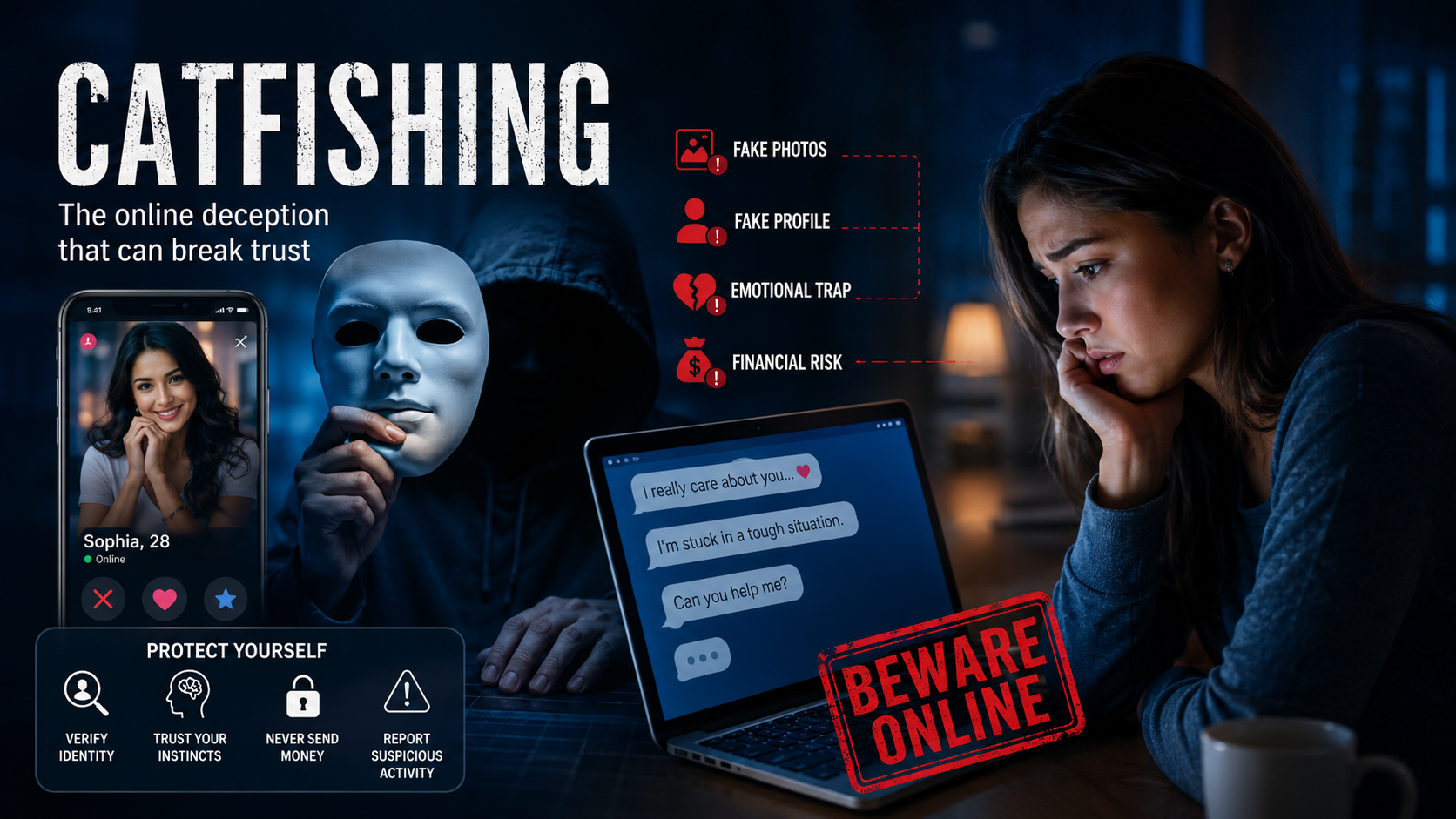
Catfishing has become one of the most talked-about online safety issues as social media, dating apps, gaming platforms, and messaging services continue to connect millions of people worldwide. While the internet has made it easier than ever to build friendships and relationships, it has also created opportunities for scammers and individuals who hide behind fake identities. As a result, catfishing has become a growing concern for internet users of all ages.
Whether someone is looking for friendship, romance, professional networking, or companionship, trust plays an important role in every online interaction. Unfortunately, not everyone presents themselves honestly. Some people create false identities using stolen photos, fake personal information, or fabricated life stories to deceive others for emotional manipulation, financial gain, or personal amusement.
Understanding how catfishing works is one of the best ways to stay safe online. In this comprehensive guide, we’ll explain what catfishing is, why it happens, the warning signs to watch for, its emotional and financial impact, and practical steps you can take to protect yourself while using the internet.
What Is Catfishing?
Catfishing is the act of creating a fake online identity to deceive another person. A catfish may pretend to be someone they are not by using false names, stolen photographs, fake occupations, or invented personal stories.
The goal of catfishing varies from case to case. Some individuals seek emotional attention, while others attempt to manipulate victims into sending money, personal information, or sensitive images.
Catfishing can occur on almost any online platform, including:
- Social media
- Dating apps
- Gaming communities
- Discussion forums
- Messaging applications
- Professional networking sites
Because communication often begins online, identifying deception can sometimes be difficult.

Where Did the Term “Catfishing” Come From?
The term became widely recognized after the release of the documentary Catfish in 2010, which explored online relationships built around false identities.
Since then, the word has entered everyday language and is commonly used to describe situations where someone intentionally misrepresents themselves online.
Today, catfishing is discussed by cybersecurity experts, law enforcement agencies, educators, and online safety organizations worldwide.
Why Do People Catfish?
There is no single reason why someone creates a fake identity.
Common motivations include:
Seeking emotional attention.
Escaping personal insecurities.
Financial fraud.
Romantic scams.
Identity theft.
Harassment.
Cyberbullying.
Entertainment at someone else’s expense.
Some cases involve organized criminal groups, while others involve individuals acting alone.
Common Types of Catfishing
Catfishing does not always follow the same pattern.
Romance Catfishing
One of the most common forms involves building a fake romantic relationship over weeks or months.
The scammer gains trust before asking for money or personal information.
Financial Catfishing
The primary goal is financial gain.
Victims may be persuaded to send money for fabricated emergencies, travel expenses, medical bills, or investment opportunities.
Friendship Catfishing
Some individuals create fake profiles simply to build friendships while hiding their true identity.
Although not every fake profile is linked to financial fraud, deception can still cause emotional harm.
Social Media Impersonation
Scammers sometimes copy someone else’s profile using stolen photos and personal details.
These fake accounts may contact friends, followers, or family members.
How Catfishing Usually Begins
Most catfishing incidents start with a simple online message.
Examples include:
A friend request.
A direct message.
A comment on social media.
A dating app match.
A gaming conversation.
The communication often feels friendly and natural.
Over time, the scammer gradually builds trust.
Warning Signs of Catfishing
Recognizing common warning signs can help reduce risk.
Be cautious if someone:
Avoids video calls.
Refuses to meet in person despite repeated opportunities.
Shares only professionally photographed images.
Provides inconsistent personal details.
Moves conversations away from public platforms immediately.
Declares strong feelings unusually quickly.
Requests financial assistance.
Creates frequent emergencies.
Avoids answering straightforward questions.
These signs do not automatically prove deception, but they may warrant additional caution.
Stolen Photos
Many catfish profiles rely on images taken from:
Social media.
Model portfolios.
Public websites.
Influencer accounts.
Reverse image search tools can sometimes help determine whether profile photos appear elsewhere online.
Emotional Manipulation
Successful catfishing often depends on emotional manipulation.
Scammers may attempt to create:
Sympathy.
Urgency.
Romantic attachment.
Trust.
Dependency.
Once emotional connections develop, victims may overlook inconsistencies.
Financial Scams
Romance-related financial scams remain among the most damaging forms of online fraud.
Common requests involve:
Medical emergencies.
Travel expenses.
Family crises.
Business investments.
Gift cards.
Cryptocurrency transfers.
Money should never be sent to someone whose identity cannot be independently verified.
Catfishing on Dating Apps
Dating platforms remain frequent targets because users are actively seeking relationships.
While many genuine relationships begin online, users should remain cautious until identities have been confirmed.
Meeting safely in public places and conducting video calls beforehand can reduce risks.
Catfishing on Social Media
Fake accounts exist across nearly every major platform.
These accounts may imitate:
Friends.
Celebrities.
Businesses.
Influencers.
Public figures.
Always verify unusual requests before responding.
Catfishing in Online Games
Gaming communities allow players worldwide to communicate.
Unfortunately, anonymous environments sometimes enable fake identities.
Personal information should never be shared casually with online acquaintances.
Psychological Impact
Victims often experience:
Embarrassment.
Betrayal.
Loss of trust.
Anxiety.
Stress.
Sadness.
The emotional consequences can be significant because victims genuinely believed the relationship was authentic.
Financial Consequences
Some victims lose substantial amounts of money.
Recovering stolen funds may not always be possible.
Prompt reporting improves the chances of investigation.
Identity Theft Risks
Sharing personal information with strangers increases identity theft risk.
Sensitive information includes:
Government identification numbers.
Bank account details.
Passwords.
Security questions.
Home addresses.
Always protect personal information online.
How to Verify Someone Online
Verification methods include:
Video calls.
Checking mutual connections.
Reverse image searches.
Reviewing profile history.
Looking for consistent information across platforms.
Legitimate users generally have no issue verifying basic identity.
Safe Online Dating Tips
Protect yourself by:
Meeting in public places.
Informing friends before dates.
Avoiding financial transactions.
Taking relationships slowly.
Trusting your instincts.
Healthy relationships develop naturally.
Parents and Teen Online Safety
Parents should discuss:
Privacy settings.
Online friendships.
Personal information.
Cyberbullying.
Scams.
Open communication encourages safer internet use.
Reporting Catfishing
Most online platforms provide reporting tools for fake accounts.
Reports may help remove fraudulent profiles and protect other users.
Serious financial scams should also be reported to relevant authorities in your country.
Protecting Your Own Identity
Strengthen your online security by:
Using strong passwords.
Enabling two-factor authentication.
Limiting publicly shared personal information.
Regularly reviewing privacy settings.
Monitoring account activity.
These habits reduce overall cybersecurity risks.
Technology and Catfishing
Artificial intelligence has introduced new challenges.
Modern tools can generate:
Realistic profile pictures.
Voice cloning.
Convincing text conversations.
Edited videos.
As technology evolves, digital literacy becomes increasingly important.
Why Awareness Matters
Education remains one of the strongest defenses against online deception.
Understanding common scam techniques helps individuals recognize suspicious behavior before becoming emotionally or financially invested.
Sharing awareness with family members also helps create safer online communities.
Building Healthy Online Relationships
The internet offers incredible opportunities to connect with people worldwide.
Healthy online relationships are built on:
Honesty.
Respect.
Transparency.
Patience.
Mutual trust.
Taking time to verify identities allows genuine relationships to develop safely.
Final Thoughts
Catfishing is an increasingly common form of online deception that affects people of all ages and backgrounds. While the internet provides countless opportunities to build friendships, find love, and connect with communities around the world, it also requires users to remain vigilant and informed.
By understanding how catfishing works, recognizing warning signs, protecting personal information, and verifying online identities before building trust, individuals can significantly reduce their risk of becoming victims. Most importantly, remember that genuine relationships are based on honesty and openness, not secrecy or pressure.
Technology will continue to evolve, and so will online scams. Staying informed, thinking critically, and practicing good digital habits are the best ways to enjoy the benefits of the online world while protecting yourself and those around you.
Stay connected with Inetfreak for the latest technology news, cybersecurity updates, internet safety guides, AI developments, and practical digital tips to help you navigate the online world with confidence.
Frequently Asked Questions (FAQs)
What is catfishing?
Catfishing is the act of creating a fake online identity to deceive someone, often for emotional manipulation, financial fraud, or personal gain.
Is catfishing illegal?
Creating a fake profile is not always illegal by itself, but activities such as fraud, identity theft, harassment, or financial scams may violate laws depending on the jurisdiction.
How can I tell if someone is catfishing me?
Common warning signs include refusing video calls, using stolen-looking photos, providing inconsistent information, moving relationships very quickly, or asking for money.
Should I send money to someone I met online?
No. Avoid sending money or sharing financial information with someone whose identity you cannot independently verify.
What should I do if I think I’ve been catfished?
Stop communicating, avoid sharing more personal information, report the account to the platform, preserve relevant messages if needed, and contact local authorities or consumer protection agencies if you believe you’ve been the victim of fraud.
This website is proudly managed and maintained by Shunya Digit.