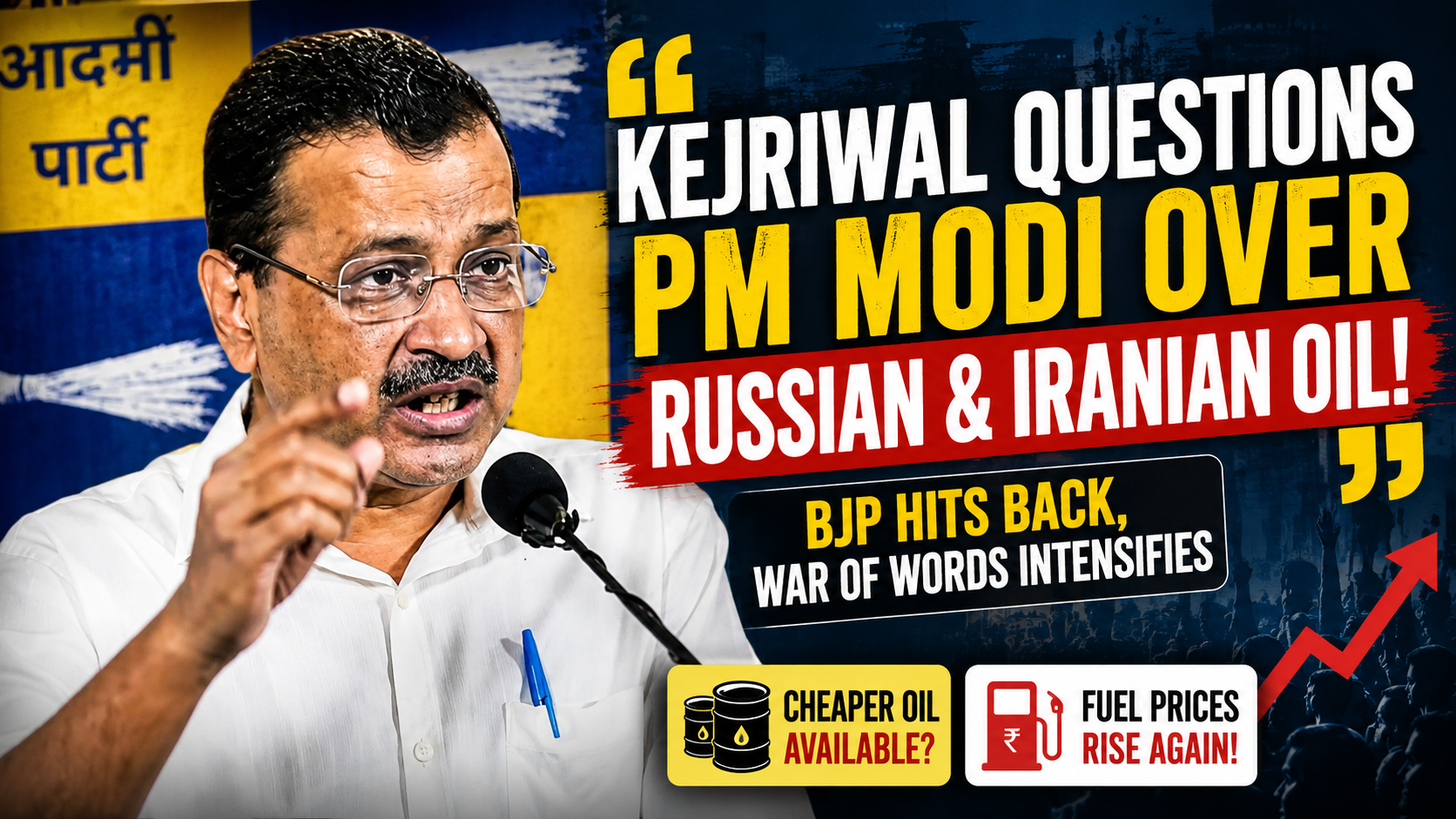
India’s rising petrol and diesel prices have triggered yet another political face-off, this time between AAP national convenor Arvind Kejriwal and the BJP-led Centre.
After fuel prices were increased for the fourth time in less than two weeks, Kejriwal publicly questioned Prime Minister Narendra Modi, asking why India was not purchasing cheaper oil from Russia and Iran, especially at a time when inflation is affecting households across the country.
The remarks quickly sparked a political debate online after BJP leader Amit Malviya responded strongly, calling Kejriwal’s claims “incomplete” and “deliberately misleading.”
The controversy arrives amid a period of rising global crude prices caused by the West Asia conflict, supply uncertainty near the Strait of Hormuz, and growing concerns over fuel inflation in India.
So what exactly did Kejriwal say, how did BJP respond, and why are petrol and diesel prices rising again?
Here’s everything you need to know.
Arvind Kejriwal Questions PM Modi Over Fuel Prices
‘Why Aren’t We Buying Cheap Oil?’
Reacting to another round of petrol and diesel price hikes, Arvind Kejriwal released a video message on X (formerly Twitter) questioning the Centre’s fuel procurement strategy.
Kejriwal argued that countries like:
- Russia
- Iran
are allegedly offering:
Cheaper oil and gas
and questioned why India is not fully utilising those options.
In his message, he asked:
“Russia and Iran are offering us cheaper and sufficient oil and gas. Why is Prime Minister Narendra Modi not buying cheap oil from them?”
The former Delhi Chief Minister also highlighted the inflation burden on ordinary Indians.
He said:
“140 crore people are facing hardships due to inflation.”
Kejriwal further questioned what he described as the Prime Minister’s “compulsions” in not purchasing more affordable crude.
Fuel Prices Rise for Fourth Time in Under Two Weeks
Petrol and Diesel Become Costlier Again
Kejriwal’s comments came shortly after another fuel price increase announced on Monday.
According to reports:
Petrol price increased by:
₹2.61 per litre
Diesel price increased by:
₹2.71 per litre
This marked:
The fourth fuel price hike in less than two weeks
The increases come as oil marketing companies continue adjusting domestic fuel prices due to:
- Rising crude oil costs
- West Asia geopolitical tensions
- Shipping disruptions
- Increased import costs
Global energy markets have remained volatile due to escalating tensions involving:
Iran, Israel and the US
as well as concerns surrounding energy transit routes.
Why Are Fuel Prices Rising?
West Asia Conflict and Crude Oil Pressure
One major reason for rising fuel costs globally is the growing instability in:
West Asia
The ongoing geopolitical conflict has impacted:
- Crude oil prices
- Energy transportation
- Shipping insurance costs
- Supply chain confidence
Another critical concern is the:
Strait of Hormuz
a strategically important route through which nearly:
20% of global energy supplies pass
Any disruption in this region often pushes international oil prices higher.
As India imports a significant portion of its crude oil requirements, global price fluctuations directly affect domestic fuel pricing.
BJP Responds to Kejriwal’s Claims
Amit Malviya Calls Statement ‘Misleading’
Soon after Kejriwal’s statement gained traction online, BJP IT Cell chief Amit Malviya hit back.
Sharing Kejriwal’s video, Malviya claimed the argument ignored key facts.
He said:
“Russia is today India’s largest oil supplier.”
According to Malviya:
India imports:
2.3 million barrels of oil per day from Russia
This, he argued, directly contradicts Kejriwal’s claim that India is not buying Russian oil.
Malviya accused Kejriwal of presenting an incomplete narrative for political reasons.
BJP’s Defence of Fuel Pricing
Government Absorbed Costs for Years?
Malviya further argued that despite global fuel volatility:
India remained one of the few countries to reduce petrol and diesel prices multiple times
during earlier crises.
He claimed that:
- During the Russia–Ukraine war
- During the Hormuz crisis
- Amid crude oil volatility
India allegedly continued providing relief to consumers.
According to him:
Oil marketing companies (OMCs)
and the government absorbed international price pressure for nearly:
Four years
He argued that the recent hikes are merely:
Delayed adjustments
rather than sudden price increases.
BJP Also Points to State Taxes
VAT Debate Enters the Conversation
Malviya also highlighted another major issue:
State VAT (Value Added Tax)
He argued that petrol and diesel prices vary depending on:
State government taxes
According to BJP:
States governed by:
- Congress
- INDIA bloc allies
often impose:
Higher VAT
which increases pump prices further.
He claimed this factor is frequently ignored in political criticism directed solely at the Centre.
Is India Buying Russian Oil?
What the Data Suggests
One of the biggest talking points in the controversy is whether India is actually purchasing Russian crude.
According to several reports:
Yes — India is buying Russian oil
In fact, since the Russia–Ukraine war, India significantly increased discounted Russian crude imports.
Russia reportedly became:
India’s largest oil supplier
because of discounted pricing opportunities.
However, market experts note:
Cheap crude doesn’t automatically mean cheap fuel
Domestic prices are influenced by:
- Refining costs
- Taxes
- Exchange rates
- Logistics
- Global pricing trends
- Government policy decisions
What About Iranian Oil?
Why Iran Is Different
The Iran question is more complicated.
India’s ability to purchase Iranian crude faces challenges due to:
International sanctions
particularly involving:
US restrictions
These sanctions have historically complicated global energy transactions involving Iran.
As a result:
Oil procurement decisions are influenced by diplomacy, trade rules, and geopolitics.
Social Media Reacts to the Political Clash
The controversy quickly spread online.
Supporters of Kejriwal argued:
- Fuel inflation hurts ordinary families
- Government should maximise cheaper imports
- Consumers deserve relief
Meanwhile BJP supporters responded:
- India already buys Russian oil
- Kejriwal ignored facts
- Global conflict is affecting everyone
The debate became another trending political issue on X.
Why Fuel Prices Matter Politically
Everyday Inflation Issue
Petrol and diesel prices remain among the most politically sensitive economic topics because they impact:
- Transportation costs
- Food prices
- Household budgets
- Business logistics
- Inflation
Fuel costs indirectly influence nearly every sector of the economy.
Even minor price hikes often trigger:
Major political reactions.
Key Highlights
- Arvind Kejriwal questioned PM Modi over not buying cheaper Russian and Iranian oil
- Petrol rose by ₹2.61/litre and diesel by ₹2.71/litre
- This marks the fourth fuel price hike in under two weeks
- BJP leader Amit Malviya called Kejriwal’s claim misleading
- BJP says Russia is already India’s largest oil supplier
- Rising crude prices linked to West Asia tensions and Hormuz disruptions
- Debate over VAT and fuel taxation also resurfaced
FAQ SECTION
Why did Arvind Kejriwal criticise PM Modi?
Kejriwal questioned why India is not buying more cheap oil from Russia and Iran despite rising fuel prices.
Is India buying Russian oil?
Yes. According to reports, Russia is currently India’s largest crude oil supplier.
Why are petrol and diesel prices increasing?
Prices are rising due to global crude oil costs, West Asia conflict, and supply concerns.
Why doesn’t India buy more Iranian oil?
Iran-related oil trade is affected by international sanctions and geopolitical considerations.
What did BJP say in response?
BJP leader Amit Malviya said Kejriwal’s claims were misleading and argued India already imports large quantities of Russian oil.
CONCLUSION
The latest political clash between Arvind Kejriwal and the BJP highlights how rising fuel prices continue to dominate public debate in India.
While Kejriwal has questioned why India isn’t purchasing more affordable Russian and Iranian oil, BJP insists that Russia is already India’s biggest crude supplier and argues that recent hikes reflect delayed adjustments caused by global instability.
As West Asia tensions continue pushing crude prices upward, petrol and diesel costs are likely to remain both an economic concern and a political flashpoint in the coming months.
Stay updated with the latest political, business, technology, and trending news only on Inetfreak.com.