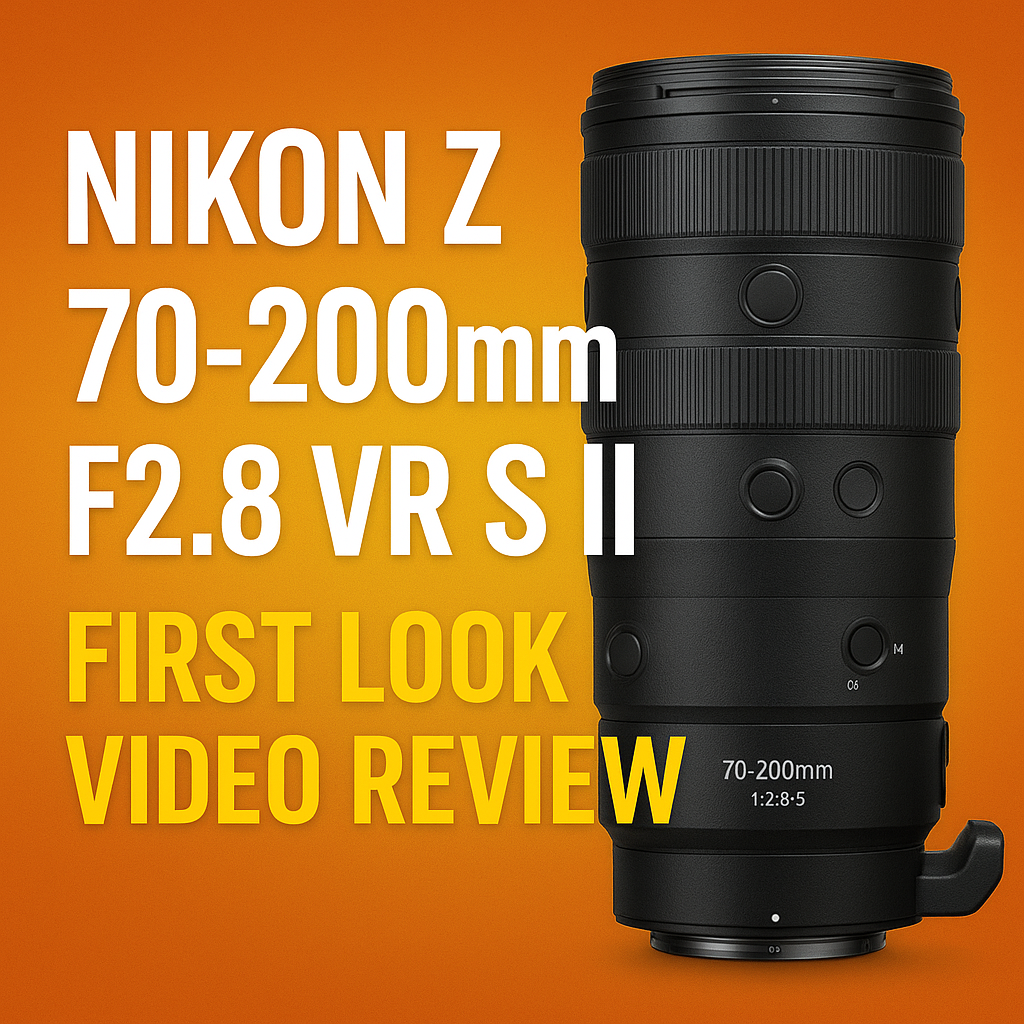
The Nikon Z 70-200mm f/2.8 VR S II is one of those lenses that instantly attracts attention from working photographers, hybrid shooters, and serious enthusiasts who live in the “telephoto zoom” zone. In this first look video review-style breakdown, we’ll focus on what matters most when you’re deciding whether this new version deserves a spot in your bag: handling, optical promises, video performance, stabilization, autofocus behavior, and real-world use cases like weddings, sports, portraits, and events. If you’ve been waiting for Nikon to refine an already respected 70-200mm for the Z system, this is the kind of update that could make a practical difference on set and on assignment.
Nikon Z 70-200mm f/2.8 VR S II: What This Lens Is (and Who It’s For)
A 70-200mm f/2.8 is a cornerstone lens for professionals because it covers flattering portrait focal lengths, compresses perspective for cinematic shots, and reaches far enough for ceremonies, sideline action, and stage work. The Z-mount “S-Line” label also signals Nikon’s premium optical and mechanical standards, and the “VR” badge indicates built-in vibration reduction meant to help both handheld stills and video stability.
The Nikon Z 70-200mm f/2.8 VR S II is aimed at:
- Wedding and event photographers who need fast autofocus and consistent sharpness at f/2.8.
- Sports and wildlife shooters who want a bright tele zoom for indoor arenas or low-light action.
- Portrait photographers who rely on creamy background blur and flattering compression.
- Video creators who need reliable subject tracking, minimal focus breathing, and stable handheld performance.
First Look: Build Quality, Handling, and Controls
In a first look video review, the initial impressions usually come down to physical usability: how the lens balances on your body, how confidently the rings operate, and whether the controls feel designed for real assignments rather than spec-sheet bragging rights.
Ergonomics and Balance on Nikon Z Bodies
Mounted on bodies like the Nikon Z8 or Z9, a 70-200mm f/2.8 typically feels “right” for long sessions—especially when you’re alternating between vertical and horizontal shooting. On smaller bodies, balance can still be very workable, but expect the lens to dominate the feel, as is normal for this class. In handheld video, balance matters even more: stable, predictable ring torque and a consistent zoom throw can make footage look calmer and more intentional.
Ring Feel and Control Layout
Pay attention to the tactile experience during your first look: the zoom ring should be smooth and damped, the focus ring responsive for manual pulls, and any customizable control ring or function buttons easy to reach without shifting your grip. These details matter when you’re shooting fast-changing scenes like receptions, press events, or sports where you can’t take your eye off the action.
Weather Sealing and Confidence in the Field
Telephoto zooms get used everywhere: dusty outdoor ceremonies, rainy sidelines, winter trails, and humid venues. Nikon’s pro-oriented sealing on S-line lenses is a major selling point, and the “II” version is expected to maintain that rugged confidence. For video shooters, weather resistance is also about reliability—no one wants a lens that becomes a worry when the forecast changes mid-shoot.
Optical Expectations: Sharpness, Contrast, and Bokeh
A “first look” isn’t always a lab test, but you can still evaluate optical character quickly by checking fine detail at multiple focal lengths, looking at high-contrast edges for fringing, and observing how backgrounds render at f/2.8.
Sharpness Across the Zoom Range
The 70-200mm category lives or dies on consistency. The best versions stay strong at:
- 70mm for environmental portraits and event candids.
- 135mm for classic portrait compression.
- 200mm where many lenses historically soften, especially wide open.
In practical terms, you want confidence that f/2.8 is usable, not just “available.” If the Nikon Z 70-200mm f/2.8 VR S II holds crisp detail at 200mm without needing to stop down, it becomes a true workhorse for dim venues and indoor sports.
Color, Contrast, and the S-Line “Look”
Nikon’s higher-end Z lenses often deliver a clean, modern rendering: solid micro-contrast, neutral-to-pleasing color, and a controlled flare profile. For video, that translates into files that grade predictably and hold contrast without looking overly harsh. For stills, it means less time fighting low contrast in backlit scenes like outdoor ceremonies or stage lighting.
Bokeh and Subject Separation at f/2.8
People buy 70-200mm f/2.8 lenses for separation as much as reach. In a first look video review, watch how backgrounds behave in real scenes: fairy lights, foliage, busy venue décor, and repeating patterns. A strong lens will keep highlights looking smooth and round (as much as the aperture design allows) and avoid nervous, jittery edges behind your subject.
Autofocus Performance: Speed, Accuracy, and Tracking
Autofocus is where a lens becomes either invisible (the best compliment) or a constant interruption. Nikon’s latest Z bodies already provide excellent subject detection, so the lens needs to keep up with fast direction changes and low-light conditions.
AF Speed for Events and Sports
For weddings and events, you want quick acquisition from near to far, especially when switching between speakers on stage, couples on the dance floor, or guests reacting across the room. For sports, acceleration and consistency matter more than raw speed; the lens must track without pulsing or hunting as players cross the frame.
Eye Detection and Face Priority in Real Scenes
In your first look testing, try sequences that expose weaknesses:
- Backlit faces near windows or spotlights.
- Subjects turning profile, wearing hats, or partially obscured.
- Multiple faces at different distances.
A strong performance looks like steady lock-on, minimal “jumping,” and reliable transitions when the active subject changes.
Manual Focus for Video Pulls
Even if you rely on AF, manual focus behavior matters for video. Smooth, repeatable focus pulls, predictable response, and a focus ring that feels designed for controlled movement can make a telephoto zoom far more usable for interviews, ceremonies, and cinematic B-roll.
VR and Video: Handheld Stability and Real-World Footage
Stabilization is a major reason to choose a Z-mount 70-200mm with VR, particularly if you’re shooting handheld video at 200mm where micro-shakes become obvious.
Nikon VR + In-Body Stabilization (IBIS)
On compatible Nikon Z bodies with IBIS, lens VR and in-body stabilization can work together to reduce handshake. In practical video shooting, you’re looking for:
- Stable framing at longer focal lengths.
- Natural-looking motion without wobble or “floaty” corrections.
- Smoother starts and stops when you pan or reframe.
For stills, effective VR can be the difference between a keeper and blur in dim venues where flash is not allowed.
Focus Breathing and Framing Consistency
Video shooters care about focus breathing because it changes framing during focus pulls, making shots look less professional. During a first look, test breathing by focusing from near to far at 70mm and again near 200mm. Minimal breathing is a serious advantage for interviews and cinematic sequences where you want focus transitions without the “zooming” side effect.
Zoom Operation for Video
Most 70-200mm f/2.8 lenses are not power zooms, so any zooming during a shot is manual. What you want is a smooth zoom ring that doesn’t jerk and doesn’t require so much force that it shakes the camera. Even if you don’t zoom mid-take, a well-damped ring improves overall handling and makes quick reframes cleaner.
Real-World Use Cases: Where This Lens Makes the Most Sense
Weddings and Events
At weddings, 70-200mm is the lens that quietly captures moments without intruding: vows, reactions, candid hugs, and details from a respectful distance. The Nikon Z 70-200mm f/2.8 VR S II’s value here depends on dependable autofocus in mixed light, strong wide-open performance at 200mm, and stabilization that helps you keep shutter speeds reasonable without constantly pushing ISO.
Portrait Sessions
For portraits, this lens class is prized for flattering compression and the ability to isolate your subject even in cluttered locations. The key traits to watch are bokeh quality, transition smoothness from in-focus to out-of-focus areas, and sharpness on eyes at f/2.8 without harshness on skin texture.
Indoor Sports and Stage Work
Indoor sports can be brutal: fast movement, poor light, and distracting backgrounds. A strong 70-200mm f/2.8 needs to focus decisively, hold contrast under sodium or LED lighting, and keep images crisp at high shutter speeds. Stage work adds challenging spotlights and deep shadows, so flare resistance and contrast retention become important.
Should You Upgrade? Z 70-200mm f/2.8 VR S vs VR S II
If you already own the earlier Nikon Z 70-200mm f/2.8 VR S, the big question is whether the “II” version meaningfully improves your daily workflow. In a first look context, the reasons to consider upgrading typically include:
- Improved video behavior (less focus breathing, smoother AF transitions, better stabilization feel).
- Refined autofocus for tracking and low-light reliability.
- Optical tweaks that increase consistency at 200mm wide open or improve flare control.
- Handling updates that make long shoots less fatiguing or controls more intuitive.
If your current lens already nails sharpness and AF for your work, upgrading only makes sense if the S II improvements directly address your pain points—especially for hybrid video demands.
First Look Video Review Checklist: What to Test Immediately
If you’re doing your own first look review, here’s a quick set of tests that reveal the lens’s character fast:
- Sharpness at f/2.8 at 70mm, 135mm, and 200mm on a detailed subject.
- Backlit flare test outdoors with the sun near the edge of frame.
- Eye AF tracking as a subject walks toward you and turns side-to-side.
- Handheld video at 200mm with VR enabled: look for micro-jitter and wobble.
- Focus breathing during a near-to-far focus pull at both ends of the zoom.
Final Thoughts
The Nikon Z 70-200mm f/2.8 VR S II enters a demanding category where expectations are high: it needs to be sharp wide open, fast and trustworthy with autofocus, and stable enough for real handheld shooting. If Nikon’s refinements translate into better video behavior, more consistent 200mm performance, and an even more confident user experience, this lens has the potential to be a top-tier choice for photographers and filmmakers who rely on a 70-200mm every week, not just occasionally.
FAQs
Is the Nikon Z 70-200mm f/2.8 VR S II good for video?
Yes, it’s designed as a premium hybrid-friendly telephoto zoom, and in a first look video review you should pay special attention to autofocus transitions, stabilization behavior at 200mm, and focus breathing during pulls.
Will the Nikon Z 70-200mm f/2.8 VR S II work well for portraits?
Absolutely. The 70-200mm range is a portrait staple, and f/2.8 provides strong subject separation. Evaluate bokeh quality and sharpness on eyes at 135–200mm for the look you prefer.
Does the Nikon Z 70-200mm f/2.8 VR S II have image stabilization?
Yes. It includes VR (vibration reduction). When paired with Nikon Z cameras that offer IBIS, you can often get more stable handheld stills and smoother handheld video, depending on settings and shooting technique.
Is the Nikon Z 70-200mm f/2.8 VR S II worth upgrading from the original VR S?
It depends on what changed and what you need. If the S II version improves video performance, focus breathing, AF reliability, or 200mm wide-open consistency in ways that matter to your work, it can be a worthwhile upgrade.
What should I test first when I get the Nikon Z 70-200mm f/2.8 VR S II?
Start with sharpness at f/2.8 across 70mm to 200mm, then test Eye AF tracking in mixed light, handheld video stability at 200mm, and a quick focus breathing check with near-to-far focus pulls.