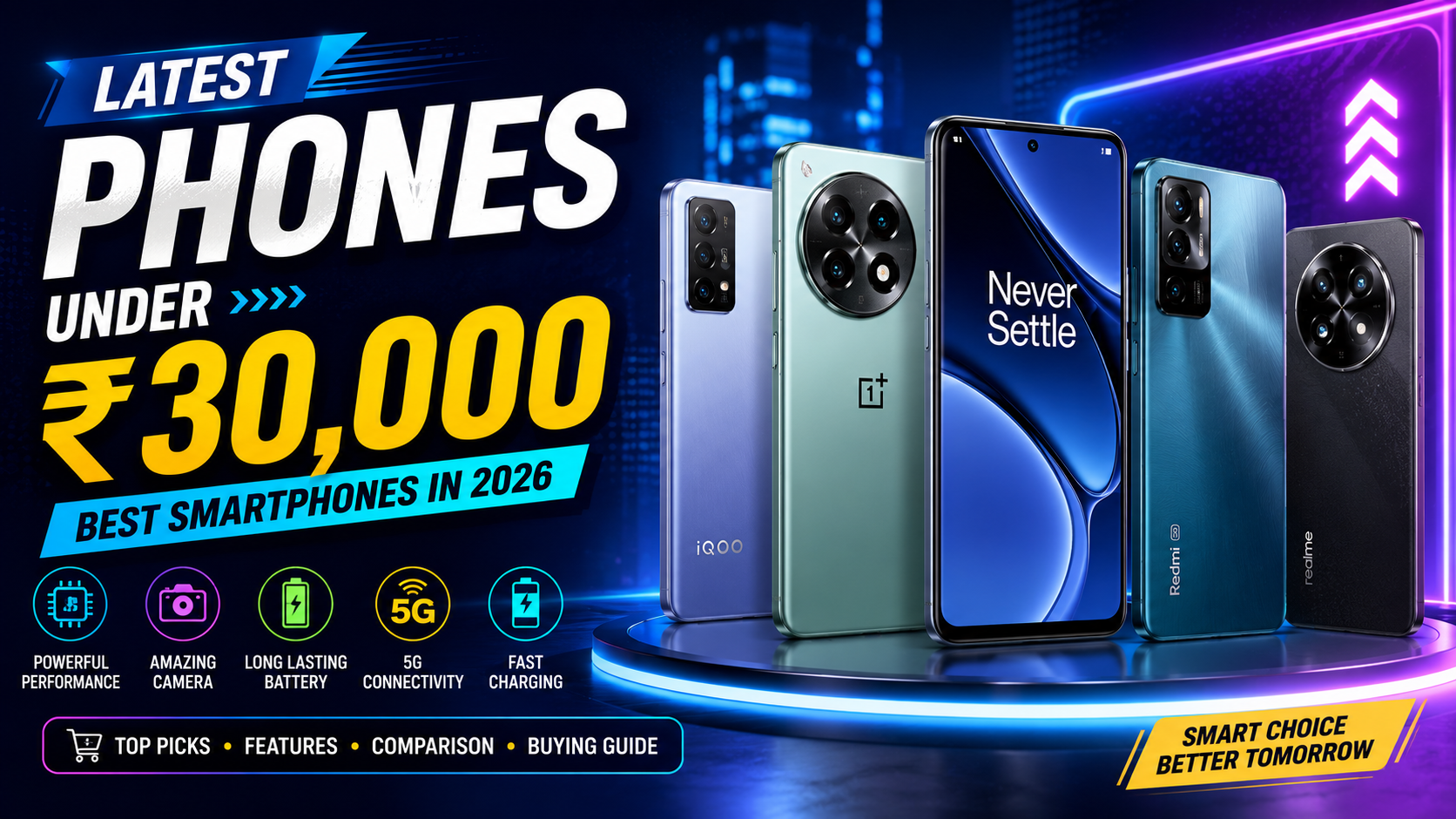
Latest phones under ₹30,000 have become some of the most competitive smartphones in today’s market, offering flagship-inspired features without the premium price tag. Over the past few years, smartphone manufacturers have significantly improved mid-range devices by introducing powerful processors, high-refresh-rate AMOLED displays, AI-powered cameras, fast charging technology, premium designs, and long-lasting batteries. As a result, buyers no longer need to spend ₹50,000 or more to enjoy a smooth and feature-rich smartphone experience.
Whether you’re a student, working professional, mobile gamer, content creator, or someone simply looking to upgrade your current device, the ₹30,000 price segment offers excellent value. Smartphones in this range are designed to handle multitasking, gaming, photography, video editing, streaming, and everyday productivity with ease.
Choosing the right smartphone can still be challenging because there are dozens of options available from leading brands. Each device focuses on different strengths such as camera quality, gaming performance, battery life, display technology, software experience, or charging speed. Understanding your priorities before making a purchase will help you find the perfect phone for your needs.
This comprehensive guide explains what to expect from smartphones under ₹30,000, the key features to compare, the latest technology trends, and practical buying tips that will help you make an informed decision.
Why the ₹30,000 Segment Is So Popular
The under ₹30,000 smartphone category has become the ideal balance between affordability and premium performance.
Consumers can enjoy features that were once limited to flagship phones, including:
AMOLED displays.
120Hz refresh rates.
5G connectivity.
Powerful chipsets.
Large batteries.
Fast charging.
Premium camera systems.
Manufacturers continue pushing innovation, making this price range one of the best choices for value-conscious buyers.
What to Expect from Smartphones Under ₹30,000
Modern mid-range smartphones now include features such as:
Premium glass or metal designs.
Slim bezels.
High-quality stereo speakers.
AI-enhanced cameras.
Long software support.
Efficient processors.
Large storage options.
Smooth multitasking.
These improvements have significantly narrowed the gap between flagship and mid-range devices.
Display Quality Matters
The display is one of the most important smartphone features.
Look for:
AMOLED panels.
Full HD+ resolution.
120Hz refresh rate.
HDR support.
High brightness levels.
Good outdoor visibility.
A quality display enhances gaming, streaming, reading, and everyday use.
Performance and Processor
The processor determines overall speed.
A capable chipset ensures:
Smooth multitasking.
Fast app launches.
Better gaming.
Efficient battery usage.
Reliable long-term performance.
Choose a phone with a modern processor optimized for both performance and power efficiency.
RAM and Storage
For most users, adequate memory ensures smoother performance.
Look for:
8GB or more RAM.
128GB or higher storage.
Expandable storage if needed.
Faster storage technology also improves app loading times and file transfers.
Camera Performance
Camera quality has improved dramatically in this segment.
Modern smartphones now offer:
AI photography.
Night mode.
Portrait mode.
Ultra-wide cameras.
Macro photography.
High-resolution sensors.
Image stabilization.
Software processing often plays an equally important role as hardware.
Video Recording
Many phones under ₹30,000 now support:
4K recording.
Electronic image stabilization.
Slow-motion video.
Time-lapse.
AI video enhancement.
These features benefit content creators and casual users alike.
Battery Life
Battery capacity continues increasing.
Most smartphones now feature:
5,000mAh batteries.
All-day performance.
Efficient power management.
Battery optimization through AI.
Heavy users should prioritize battery performance alongside charging speed.
Fast Charging
Charging technology has improved significantly.
Modern devices often support:
Fast wired charging.
Smart charging protection.
Optimized charging cycles.
Reduced charging times.
This convenience minimizes downtime throughout the day.
5G Connectivity
5G has become standard in this price segment.
Benefits include:
Faster downloads.
Lower latency.
Better streaming.
Improved gaming.
Future-ready connectivity.
Purchasing a 5G device helps extend long-term usability.
Gaming Performance
Gamers should prioritize:
Efficient processors.
Good cooling systems.
High refresh displays.
Touch response.
Large batteries.
Gaming optimization software.
These features improve overall gameplay.
Software Experience
A clean operating system improves daily use.
Look for:
Minimal bloatware.
Regular updates.
User-friendly interface.
Security improvements.
Customization options.
Good software support extends device lifespan.
Build Quality
Premium materials improve durability.
Many smartphones now feature:
Glass backs.
Metal frames.
Protective coatings.
Strong display glass.
Water-resistant designs.
Build quality contributes to long-term reliability.
Audio Experience
Entertainment becomes more enjoyable with:
Stereo speakers.
High-resolution audio.
Noise cancellation.
Quality microphones.
Clear voice calling.
Music lovers should compare audio features before purchasing.
Security Features
Modern smartphones provide multiple security options.
Common features include:
Fingerprint scanners.
Face unlock.
App locking.
Secure folders.
Privacy controls.
Regular security updates are equally important.
AI Features
Artificial intelligence enhances numerous smartphone functions.
Examples include:
Camera optimization.
Battery management.
Voice assistance.
Photo editing.
Language translation.
AI continues becoming a major selling point.
Photography for Social Media
Content creators benefit from:
High-quality front cameras.
Portrait effects.
Beauty filters.
HDR processing.
Video stabilization.
Quick sharing tools.
Social media optimization has become a key feature.
Productivity Features
Professionals appreciate smartphones capable of handling:
Video conferencing.
Document editing.
Cloud storage.
Email management.
Calendar organization.
Task management.
These features transform smartphones into productivity tools.
Choosing the Right Smartphone
Before purchasing, identify your priorities.
Consider whether you value:
Gaming.
Photography.
Battery life.
Software.
Display.
Charging speed.
Build quality.
Different users require different strengths.
Common Buying Mistakes
Avoid choosing a smartphone based only on specifications.
Also evaluate:
Software experience.
Brand reputation.
Customer support.
Warranty.
Long-term updates.
Real-world performance often differs from benchmark numbers.
Tips Before Buying
Read professional reviews.
Watch hands-on videos.
Compare multiple devices.
Check after-sales service.
Understand update policies.
Research helps prevent buyer’s regret.
Future Smartphone Trends
Upcoming smartphones are expected to introduce:
More AI features.
Better cameras.
Satellite communication.
Improved battery technology.
Advanced displays.
Enhanced security.
Foldable designs.
Mid-range devices will continue benefiting from flagship innovations.
Why This Price Range Offers Great Value
The under ₹30,000 category delivers one of the best balances between price and performance.
Consumers receive:
Premium features.
Strong performance.
Modern connectivity.
Excellent cameras.
Reliable battery life.
Long-term usability.
For many users, spending more provides only marginal improvements.
Final Thoughts
The latest phones under ₹30,000 offer an exceptional balance of performance, design, camera quality, and modern features, making them one of the smartest choices for buyers in 2026. Whether you’re upgrading your current device or purchasing your first premium mid-range smartphone, this segment provides excellent value without requiring a flagship budget.
By focusing on your personal priorities—whether it’s gaming, photography, battery life, display quality, or software experience—you can choose a smartphone that delivers reliable performance for years to come. With manufacturers continuously bringing flagship-level innovations to affordable devices, there’s never been a better time to invest in a smartphone under ₹30,000.
Stay connected with Inetfreak for the latest smartphone launches, technology news, gadget reviews, buying guides, AI innovations, and everything happening in the world of consumer electronics.
Frequently Asked Questions (FAQs)
Which is the best phone under ₹30,000?
The best phone depends on your priorities, such as camera quality, gaming performance, battery life, software experience, or display. Compare features based on your usage before making a decision.
Can I get a good gaming phone under ₹30,000?
Yes. Many smartphones in this price range feature powerful processors, high-refresh-rate displays, efficient cooling systems, and large batteries suitable for gaming.
Are phones under ₹30,000 good for photography?
Absolutely. Many devices offer advanced AI cameras, night mode, portrait photography, ultra-wide lenses, and high-quality video recording.
Should I buy a 5G phone?
Yes. Most smartphones in this segment now support 5G, making them more future-ready for evolving mobile networks.
How much RAM is recommended?
For smooth multitasking and long-term performance, 8GB RAM with at least 128GB storage is generally a solid choice for most users.
This website is proudly managed by Shunya Digit