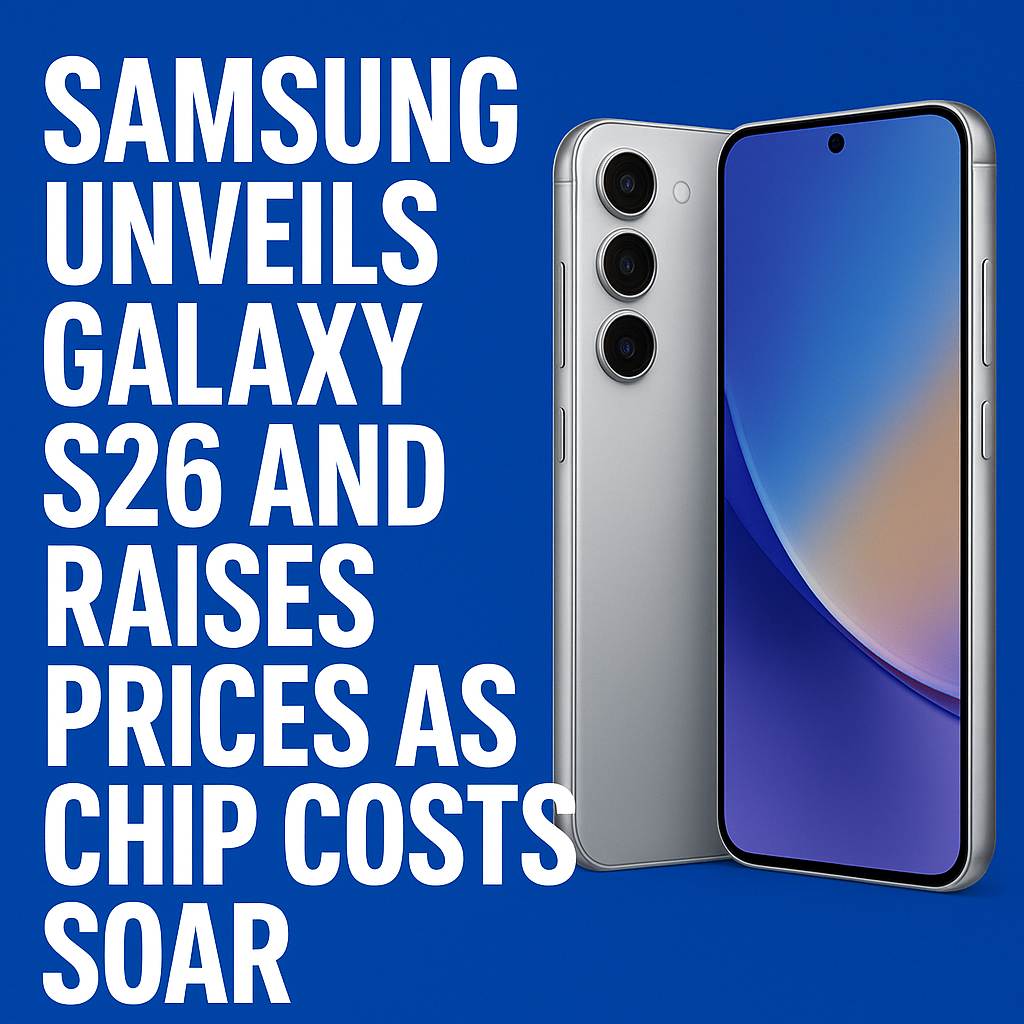
Samsung has officially unveiled the Galaxy S26 lineup, and the headline isn’t only about new cameras, brighter displays, or smarter AI features—it’s about price. With chip costs soaring across the industry, Samsung is raising prices on the Galaxy S26 series in several markets, signaling a broader shift in smartphone economics. As advanced processors become more expensive to design and manufacture, premium phones are increasingly priced like luxury electronics, and 2026 may be the year that trend becomes impossible to ignore.
Samsung Galaxy S26 launch: what’s new and why prices are climbing
The Galaxy S26 announcement highlights two parallel stories: meaningful hardware and software upgrades, and a more expensive supply chain. Samsung’s newest flagship family is built around next-generation chipsets, upgraded memory configurations, and AI-first features that lean heavily on on-device processing. Those improvements are great for performance, but they also depend on cutting-edge silicon—precisely where costs have risen the fastest.
In practical terms, Samsung’s pricing strategy for the Galaxy S26 reflects:
- Higher per-unit chipset costs for leading-edge nodes and advanced packaging
- More expensive memory and storage components in premium configurations
- Rising costs tied to yields, wafer pricing, and supply constraints in the semiconductor ecosystem
- Increased R&D spending for AI features that require stronger NPUs and better thermal design
Galaxy S26 lineup overview: models, positioning, and target buyers
While exact regional lineups and naming can vary, Samsung’s flagship launches typically include multiple tiers designed to capture different segments of the premium market. The Galaxy S26 family follows that playbook by offering a core model focused on balanced performance, plus higher-end versions aimed at power users, creators, and those who want the largest display and battery.
Galaxy S26: the mainstream flagship
The base Galaxy S26 is designed to attract buyers who want a top-tier Samsung phone without paying the absolute maximum. It typically emphasizes a high-quality display, strong main camera performance, and a compact-to-mid-size form factor. Price increases here matter most because this is the model that draws the highest volume of buyers.
Galaxy S26+: bigger screen, bigger battery, higher cost
The Plus model usually offers a larger display and battery, often sharing much of the same camera and chipset package as the base model. With rising chip costs, this tier can see a more noticeable price bump since it’s frequently positioned as the “sweet spot” upgrade.
Galaxy S26 Ultra: the premium halo device
The Ultra model is Samsung’s flagship showcase, typically bringing the most advanced camera system, the most RAM and storage options, and a feature set aimed at professionals and enthusiasts. Even if the Ultra already commands premium pricing, expensive new silicon and enhanced camera processing pipelines can push it further upward.
Why chip costs are soaring in 2026
The biggest driver behind the Galaxy S26 price increase is the chip market. Modern smartphone processors aren’t just CPU upgrades; they are complex systems-on-chip (SoCs) integrating GPU, NPU, image signal processing, modems, security modules, and power management capabilities. As these components improve, they demand smaller process nodes, more transistors, and more sophisticated manufacturing techniques.
Advanced process nodes are expensive
Leading-edge chip manufacturing requires cutting-edge equipment, advanced lithography, and highly controlled production environments. The move to newer nodes can bring efficiency and performance gains, but it often comes with:
- Higher wafer costs at the newest manufacturing nodes
- More complex design requirements and longer validation cycles
- Potential yield challenges early in a node’s lifecycle
Advanced packaging and memory bandwidth demands
Phone chips increasingly rely on advanced packaging and tighter integration to deliver speed without draining battery. Meanwhile, AI features and computational photography benefit from higher memory bandwidth and faster storage, which can push component choices upward in price.
AI on-device processing is raising the baseline requirements
Samsung’s Galaxy AI direction—like many competitors—leans into on-device intelligence for privacy, responsiveness, and offline capability. But running AI tasks locally requires more capable NPUs, better cooling, and often higher RAM ceilings. Those requirements raise the cost floor of a “true flagship” in 2026.
Samsung’s pricing strategy: how the Galaxy S26 increase may play out
Samsung typically calibrates pricing based on region, currency conditions, local competition, and carrier partnerships. With the Galaxy S26, price increases are tied to both the bill of materials and broader business realities, including sustaining margins in a costly component environment.
Regional price differences and currency pressures
Buyers may see different price jumps depending on local taxes, import duties, and exchange rates. In some markets, a modest MSRP increase can become more significant after currency conversion and retail markups.
Storage tiers may become the new “hidden” price hike
Even when entry pricing looks manageable, storage and RAM configurations can change the true cost of ownership. If Samsung positions higher storage tiers more prominently, many buyers will effectively pay more than last year’s average selling price.
Carrier promotions may soften the sticker shock
In markets where carrier subsidies and trade-in deals are strong, Samsung can raise list prices while relying on promotions to keep monthly payments palatable. This can make the Galaxy S26 price increase feel less dramatic at checkout, even if the MSRP is higher.
What the Galaxy S26 offers to justify a higher price
Consumers generally accept higher prices when they feel the improvements are tangible. Samsung’s Galaxy S26 upgrades are expected to focus on performance, imaging, display quality, and AI features that add everyday convenience.
Next-generation performance and efficiency
New chipsets typically bring faster CPU and GPU performance along with better power efficiency. If Samsung delivers noticeable battery life gains alongside smoother gaming and multitasking, the S26 can make a strong value argument even at a higher price point.
Camera upgrades driven by computational photography
Modern camera improvements come as much from processing as from sensors. Enhanced image signal processing, AI-assisted video stabilization, and better low-light handling can all depend on more advanced silicon, contributing to higher costs but also better real-world results.
Display improvements and durability refinements
Flagship Samsung phones are known for high-end displays. Brighter panels, improved adaptive refresh behavior, and tougher materials can raise manufacturing costs. If Samsung pairs those with durability upgrades—better scratch resistance, improved water resistance, or stronger frames—it can help justify a price increase.
How the Galaxy S26 price increase affects buyers
The impact of Samsung raising Galaxy S26 prices will depend on how you buy phones and what you value most. Some users will prioritize having the newest flagship immediately; others may look for discounts, older models, or alternative brands.
Best candidates to buy at launch
- Power users who want peak performance for gaming, editing, or heavy multitasking
- Creators who benefit from camera and video improvements
- Users who rely on on-device AI features for productivity and privacy
Who should consider waiting
- Value-driven buyers who can benefit from post-launch promotions
- Users coming from a recent flagship (S24/S25 generation) where upgrades may be incremental
- Anyone willing to buy the previous model at a lower price once S26 inventory ramps up
Galaxy S26 vs older Galaxy models: is upgrading worth it?
If you’re using an older device, the Galaxy S26 may feel like a substantial leap—especially in battery efficiency, camera processing, and overall responsiveness. For users on a two- to four-year upgrade cycle, the added cost may still make sense because you’re also getting more years of software support and better resale value.
However, if you’re already on a recent premium phone, the smarter financial move might be to compare:
- Total upgrade cost after trade-in value
- Battery health and performance of your current device
- Whether new AI features are genuinely useful for your workflow
- Camera improvements that matter to your style of photography or video
What this means for the smartphone market in 2026
Samsung’s decision to raise Galaxy S26 prices due to soaring chip costs is not happening in isolation. The entire flagship segment is wrestling with the cost of bleeding-edge silicon, premium materials, and AI-driven feature sets that demand stronger hardware.
Over the next year, buyers should expect:
- Higher average selling prices for top-tier phones across major brands
- More emphasis on trade-in programs and financing to reduce upfront pain
- Increased differentiation in “Ultra” or “Pro” models as brands chase higher margins
- More attention to midrange phones that offer near-flagship experiences for less
Smart ways to buy the Galaxy S26 for less
If you want the Galaxy S26 but don’t want to absorb the full impact of higher pricing, there are practical strategies that often save real money.
Time your purchase around promotions
Launch windows frequently include trade-in bonuses, accessory bundles, and limited-time storage upgrades. Waiting a few weeks or months can also lead to better discounts depending on your region.
Use trade-ins and compare offers
Samsung direct, carriers, and major retailers may offer different trade-in valuations. Comparing options can reduce the effective price far more than a small MSRP difference.
Choose storage based on real usage
Higher storage tiers can add significant cost. If you rely on cloud storage and stream most media, the base or mid-tier storage option may provide the best value.
FAQs
Why did Samsung raise Galaxy S26 prices?
Samsung raised Galaxy S26 prices largely because chip costs have increased, driven by expensive advanced manufacturing nodes, higher wafer pricing, complex packaging, and greater hardware requirements for on-device AI and camera processing.
Will Galaxy S26 prices be higher in every country?
Not necessarily. Pricing varies by region due to taxes, currency exchange rates, import duties, and local competition. Some markets may see a larger increase than others, and promotions can change the effective price.
Does the Galaxy S26 offer enough upgrades to justify the price?
For many buyers, the value comes from better performance, improved battery efficiency, camera enhancements, and expanded AI features. Whether it’s “worth it” depends on what phone you’re upgrading from and how much you’ll pay after trade-in and discounts.
Should I buy the Galaxy S26 at launch or wait?
If you want the newest features immediately and can take advantage of launch trade-in deals, buying at launch can make sense. If you prioritize value, waiting for seasonal promotions or price drops typically reduces the total cost.
Will older Galaxy models get cheaper after the Galaxy S26 release?
In many cases, yes. When a new flagship launches, retailers and carriers often discount the previous generation to clear inventory, making last year’s models a strong value option for buyers who don’t need the latest features.