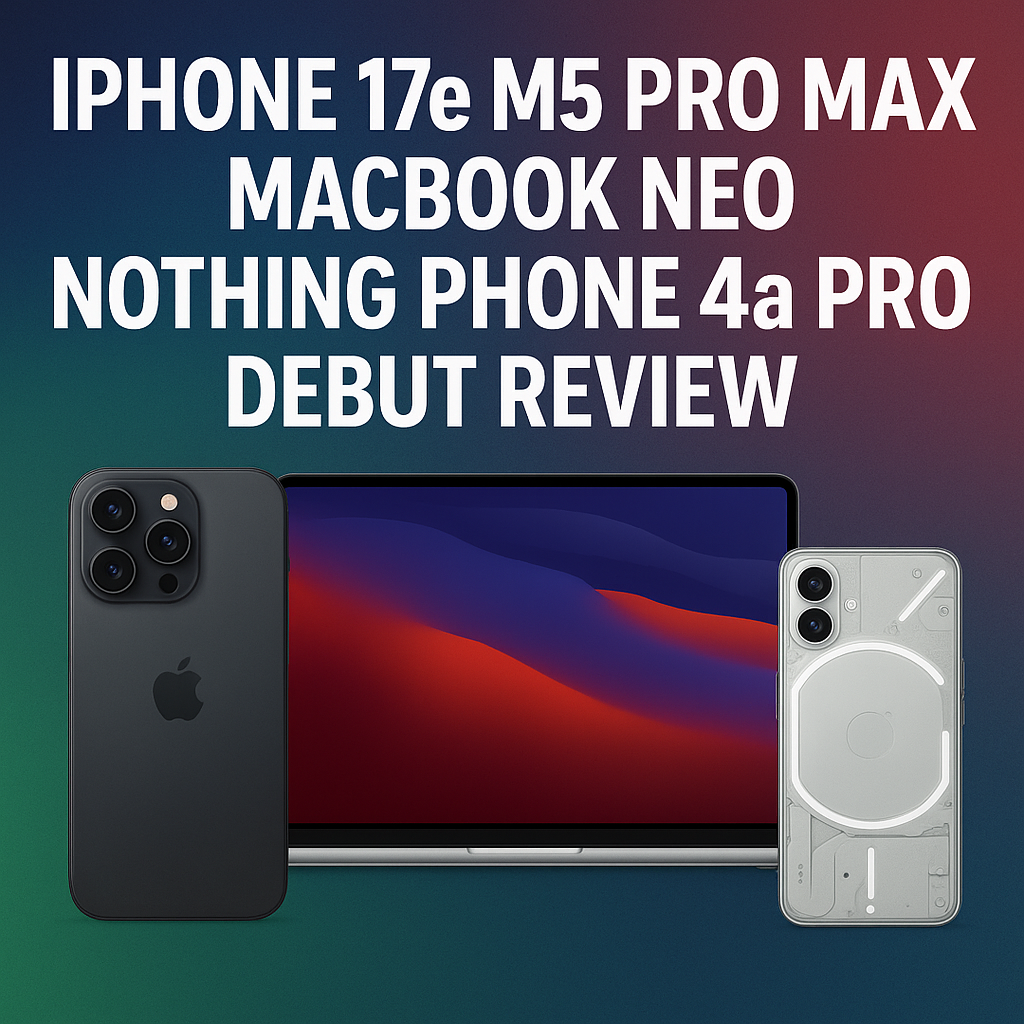
The 2026 gadget cycle is already shaping up to be one of the busiest in years, with rumored and newly announced devices aiming to redefine what “midrange,” “flagship,” and even “portable workstation” mean. In this debut review roundup, we’re looking at four headline-grabbers that are dominating searches and conversations: the iPhone 17e, the M5 Pro Max MacBook Neo, and the Nothing Phone 4a Pro. Each targets a different kind of buyer, but all of them share one goal: deliver more performance, smarter AI features, and stronger value than last year’s models.
Below, you’ll find a practical first-look review focused on design, displays, cameras, performance, battery life, and what each device is likely to do best. Whether you’re upgrading from an older iPhone, shopping for a next-gen MacBook for creative work, or considering a distinctive Android alternative, this guide compares the highlights and trade-offs in plain English.
iPhone 17e Debut Review: The “Essential” iPhone Gets Serious
The iPhone 17e appears positioned as Apple’s “smart value” iPhone for users who want modern performance and camera quality without paying top-tier Pro pricing. If Apple continues its trend of tightening the gap between entry models and flagships, the 17e could become the default recommendation for most iOS buyers—especially those coming from iPhone 12, 13, or older.
Design and Display
Early impressions suggest the iPhone 17e is all about refined simplicity: premium materials, slimmer bezels, and a display that looks closer to the Pro line than ever. Apple’s goal here seems to be “good enough that you don’t feel like you settled.”
- Build: Lightweight, durable chassis with Apple’s usual tight tolerances and premium feel.
- Screen: Bright, color-accurate OLED with improved outdoor visibility and smoother scrolling compared to older base models.
- Ergonomics: Comfortable one-handed use, with balanced weight distribution for long reading or streaming sessions.
Performance and iOS Features
Even when Apple targets value, it rarely compromises on responsiveness. The iPhone 17e is expected to deliver fast app launches, fluid multitasking, and excellent longevity thanks to Apple’s tight hardware-software integration. The big story is how Apple is likely to expand on-device intelligence features across more models.
- Everyday speed: Smooth social apps, camera processing, and gaming at high settings for most titles.
- AI and productivity: Smarter voice dictation, better photo search, and more contextual suggestions throughout iOS.
- Longevity: Strong resale value and long software support remain key advantages for iPhone buyers.
Camera: Practical Upgrades That Matter
The iPhone 17e camera experience is less about flashy zoom ranges and more about consistent results. Expect quick shutter response, reliable HDR, and clean low-light shots—exactly what most users rely on daily. If Apple includes improved computational photography from higher-end models, the 17e could become a standout for casual creators.
- Photos: Natural skin tones, strong dynamic range, and sharp detail without over-processing.
- Video: Stable footage, great microphones, and easy editing/sharing within the Apple ecosystem.
- Portraits: More accurate edge detection and nicer background separation than older generations.
Battery and Charging
Battery life on “e” models typically aims for all-day reliability rather than record-breaking endurance. If Apple pairs efficiency gains with a slightly larger battery, the iPhone 17e could comfortably last a full day of mixed use, including navigation, streaming, and camera use.
- Real-world use: Expect a full day for most users; heavy shooters and gamers may need a top-up.
- Charging: Fast charging support plus convenient accessory compatibility for desks and cars.
M5 Pro Max MacBook Neo Debut Review: Apple’s New Portable Workhorse
The M5 Pro Max MacBook Neo is the most intriguing device in this roundup because it signals Apple’s continued push into “desktop-class performance in a laptop.” If the Neo line is aimed at creators, developers, and power users who want a high-end MacBook without always jumping to the most expensive configuration, it could become the sweet spot in Apple’s lineup.
Design and Display: Built for Long Sessions
MacBook design changes tend to be evolutionary, but the Neo branding suggests a focus on modern usability: strong battery life, improved thermals, and a display tuned for creators. Expect a premium build, excellent trackpad feel, and a screen that’s a pleasure to stare at for eight hours.
- Chassis: Rigid aluminum build designed to travel well and resist flex.
- Display: High brightness and accurate color calibration for photo/video work.
- Comfort: Excellent keyboard feel and palm rest comfort for writing, coding, and editing.
M5 Pro Max Performance: CPU, GPU, and On-Device AI
The M-series story has always been about performance per watt, and the M5 Pro Max likely doubles down on that. The biggest wins should show up in sustained performance (less throttling), faster media workflows, and AI-assisted tasks that run locally for speed and privacy.
- Creative workflows: Faster exports, smoother timeline scrubbing, and stronger real-time effects performance.
- Development: Quicker builds, stable virtualization workflows, and excellent multi-monitor productivity.
- AI tasks: Faster local inference for transcription, summarization, and creative tools that lean on the Neural Engine.
Battery Life, Thermals, and Noise
For many buyers, the “Pro Max” name is only worth it if it stays cool and quiet under load. Apple’s best laptops keep fan noise minimal in everyday work and avoid performance drops during long renders or compilations.
- Battery: Designed for full-day mobility even with heavier multitasking than typical ultrabooks.
- Thermals: Improved heat management for sustained performance in editing and 3D workloads.
- Noise: Quiet in light use; controlled fan behavior when pushed hard.
Who Should Buy the MacBook Neo?
The MacBook Neo concept makes the most sense for users who need real power but still want portability. It’s particularly compelling if you’re moving from an Intel Mac or an older M1/M2 system and your work is increasingly GPU-accelerated or AI-assisted.
- Best for: Video editors, photographers, designers, music producers, developers, and students in demanding fields.
- Not ideal for: Buyers who only browse, stream, and write documents—an Air-class Mac remains better value.
Nothing Phone 4a Pro Debut Review: Style Meets Smart Midrange
The Nothing Phone 4a Pro aims to be the most interesting midrange phone you can buy, prioritizing design identity, a clean interface, and thoughtful features that make daily use feel premium. Nothing’s challenge is to deliver camera consistency and long-term reliability while keeping the price competitive against aggressive rivals.
Design: The “Nothing” Look Still Stands Out
If you’re bored of look-alike slabs, the Nothing Phone 4a Pro is the antidote. Its signature visual language is more than aesthetics; it’s also about communication—light-based alerts, quick glance status, and a device that feels personal.
- Build: Distinctive transparent-inspired styling with a confident, modern finish.
- In-hand feel: Balanced weight and a comfortable grip for long use.
- Identity: A rare Android phone that’s instantly recognizable from across the room.
Display and Daily Performance
The 4a Pro’s goal is to feel fast where it matters: scrolling, switching apps, messaging, maps, and casual gaming. A smooth refresh rate and strong brightness can make a midrange phone feel genuinely premium, especially if software stays clean and responsive.
- Screen: Smooth scrolling and strong contrast for streaming and reading.
- Software: Minimal bloat, thoughtful animations, and useful customization.
- Connectivity: Solid everyday performance on Wi-Fi and cellular for calls and video chat.
Camera: The Midrange Reality Check
Nothing phones often impress in good light, and the 4a Pro looks poised to do the same. The real question is consistency: skin tones, motion handling, and low light. If Nothing’s processing has improved, this could be a midrange camera worth recommending to travelers and social creators.
- Daylight photos: Crisp shots with pleasing colors and strong dynamic range.
- Portraits: Good subject separation with occasional edge challenges in tricky scenes.
- Low light: Better than older midrange phones, but still behind top flagships.
Battery, Charging, and Value
The Nothing Phone 4a Pro’s success hinges on value. Buyers want a phone that lasts all day, charges quickly, and stays smooth over time. If Nothing nails software support and battery health management, the 4a Pro could be the midrange standout of the year.
- Battery: Comfortable all-day use for most people, even with heavier social and streaming habits.
- Charging: Fast top-ups that reduce battery anxiety during travel or long days.
- Value: Strong “personality per dollar” compared to more generic alternatives.
iPhone 17e vs MacBook Neo vs Nothing Phone 4a Pro: Which Debut Matters Most?
These devices aren’t direct competitors, but they reflect where the market is heading: more on-device AI, better efficiency, and clearer product identities. The iPhone 17e likely becomes the mainstream iOS pick, the M5 Pro Max MacBook Neo targets serious production workloads, and the Nothing Phone 4a Pro offers a refreshing Android experience that feels designed rather than assembled.
Quick Buyer Guide
- Choose iPhone 17e if you want long-term iOS updates, reliable cameras, smooth performance, and strong resale value.
- Choose M5 Pro Max MacBook Neo if you need a portable workstation for editing, coding, audio, 3D, and AI-assisted creation.
- Choose Nothing Phone 4a Pro if you want standout design, clean software, strong everyday speed, and midrange value with personality.
Final Verdict: A Strong Debut Class with Different Strengths
The iPhone 17e feels like Apple refining its most important category: the phone most people should buy. The M5 Pro Max MacBook Neo looks poised to raise the ceiling for portable creativity and productivity, especially for users who demand sustained performance. And the Nothing Phone 4a Pro continues Nothing’s mission to make phones fun again—without ignoring the basics that matter, like battery life and smooth software.
If you’re shopping this cycle, the best strategy is to pick based on how you actually use your devices: camera frequency, editing workloads, gaming needs, and how much you care about ecosystem features. On paper and in early impressions, this debut lineup has something compelling for nearly everyone.
FAQs
What is the iPhone 17e meant to be in Apple’s lineup?
The iPhone 17e is positioned as a value-focused iPhone that still feels modern—aiming to deliver strong performance, a high-quality OLED display, and dependable cameras at a lower price than the Pro models.
Is the M5 Pro Max MacBook Neo good for video editing and creative work?
Yes. The M5 Pro Max MacBook Neo is built for sustained performance and accelerated media workflows, making it a strong choice for video editing, motion graphics, photography, music production, and other creator workloads.
How does the Nothing Phone 4a Pro differ from typical midrange Android phones?
The Nothing Phone 4a Pro emphasizes distinctive design, clean software, and a premium “feel” in daily use. It’s aimed at buyers who want something different from standard midrange phones while keeping pricing competitive.
Which device offers the best battery life?
The MacBook Neo is likely to lead in absolute battery endurance due to its larger battery and efficiency-focused Apple silicon. Between phones, battery life will depend on usage, but both the iPhone 17e and Nothing Phone 4a Pro are designed for all-day reliability.
Should you upgrade this year or wait?
Upgrade if your current device struggles with battery health, performance, or camera quality, or if your workflow now benefits from on-device AI features. If your current phone or laptop still meets your needs, waiting can be worthwhile—especially as pricing and configurations settle after launch.