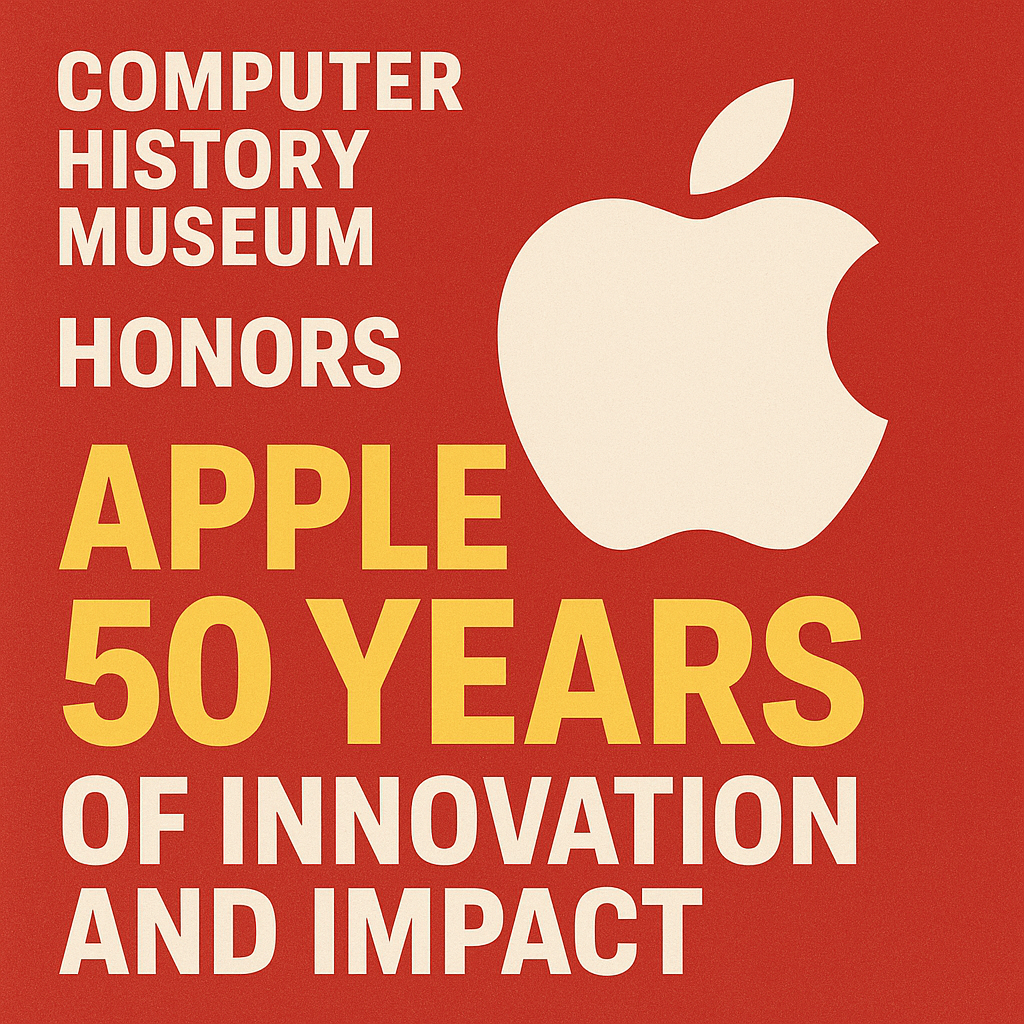
The Computer History Museum’s decision to honor Apple for 50 years of innovation and impact is more than a celebratory milestone—it’s a recognition of how deeply Apple has shaped modern computing, consumer electronics, and digital culture. From the early days of the Apple I and Apple II to the iPhone era and beyond, Apple’s influence has reached classrooms, offices, studios, hospitals, and homes around the world. By spotlighting Apple’s legacy, the Computer History Museum (CHM) reinforces an essential idea: the history of computing is not only a story of machines and code, but also of design, accessibility, and the ways technology becomes personal.
Why the Computer History Museum’s Recognition Matters
The Computer History Museum in Mountain View, California, is widely regarded as one of the most important institutions preserving the story of the digital age. Its collections, exhibitions, and educational work help translate complex technological breakthroughs into a narrative the public can understand. When CHM honors Apple, it effectively frames Apple’s contributions as historically significant in the same way we think about foundational inventions like the transistor, the microprocessor, and the internet.
This kind of recognition matters because Apple’s role has often been distinctive: it has repeatedly taken emerging technologies and delivered them in integrated, consumer-ready products that people actually want to use. The museum’s spotlight invites audiences to consider not just what Apple made, but what those products changed—how people learned, created, communicated, and worked.
A milestone that captures multiple eras of computing
Apple’s 50-year arc intersects with several major chapters in computer history:
- The home computing boom of the late 1970s and early 1980s
- The graphical user interface revolution and desktop publishing in the 1980s
- The internet and creative professional era of the late 1990s and 2000s
- The smartphone and app economy of the 2010s
- Modern privacy, silicon, and services shaping the 2020s
Apple’s Early Innovations: From Hobbyists to Households
Apple began at a moment when computing was shifting from institutions to individuals. Early personal computers often demanded technical fluency—assembling parts, toggling switches, and reading dense documentation. Apple helped broaden the audience by packaging computing into approachable products with clear use cases.
Apple I and Apple II: lowering the barriers to entry
The Apple I is often remembered for its place in the origin story, but it was the Apple II that helped define what a successful personal computer could be: relatively accessible, expandable, and usable for both learning and practical tasks. With software ecosystems emerging around it, the Apple II became prominent in schools and small businesses, accelerating computer literacy for an entire generation.
In the context of a museum honoring Apple’s impact, the Apple II era is essential because it represents a transition point. Computing stopped being a niche pursuit and started becoming a household tool—something that could support education, productivity, and creativity.
The Macintosh and the User Interface Revolution
If Apple’s early products made personal computing attainable, the Macintosh helped make it intuitive. The shift toward a graphical user interface (GUI), windows, icons, menus, and pointing devices changed what people expected from computers. It reduced the need to memorize commands and made interaction visual and direct.
Design as a competitive advantage
The Macintosh also established a lasting Apple theme: design is not decoration—it’s part of function. Apple’s emphasis on typography, layout, and consistent user experiences created a distinctive identity and influenced the broader industry. Over time, the idea that software should feel coherent, learnable, and even delightful became an expectation, not a luxury.
Desktop publishing and creative workflows
Apple’s impact expanded dramatically when the Mac became central to desktop publishing and creative production. With the rise of page layout tools and high-quality printing workflows, individuals and small organizations could produce professional materials without relying on large, expensive publishing infrastructures.
- Education: schools used Macs to teach basic computing and creative projects
- Business: small teams could create marketing collateral in-house
- Media and design: workflows became faster and more iterative
Apple’s Comeback and the Rise of an Ecosystem
By the late 1990s, Apple entered a new chapter that would reshape its future: a renewed focus on product clarity, industrial design, and a tight link between hardware and software. This period is often framed as Apple’s comeback, but it also marks a strategic shift toward building an ecosystem—devices and services that work together with minimal friction.
iMac and the internet-ready consumer computer
The iMac emphasized simplicity, connectivity, and an approachable out-of-the-box experience. It reflected a broader reality: the internet was becoming central, and computers needed to be easy to set up and use online. Apple’s emphasis on integration—fewer steps, fewer confusing choices—became a template for mainstream consumer technology.
iPod and iTunes: reshaping digital media
Apple’s influence expanded beyond computing into music and media distribution. The iPod and iTunes helped normalize the concept of portable digital libraries and legitimized a more convenient way to acquire music at scale. While the music industry’s digital transition was complex, Apple played a pivotal role in accelerating how consumers experienced media in the digital age.
The iPhone Era: Apple’s Global Impact Goes Mainstream
The iPhone is arguably Apple’s most consequential product in terms of global impact. It did not merely improve the phone—it reframed it as a pocket computer with an interface built around touch. This shift impacted communication, commerce, entertainment, photography, navigation, and work.
The App Store and the modern software economy
With the App Store, Apple helped standardize a model for software discovery, distribution, and monetization on mobile. Entire new categories of businesses formed around mobile apps, and many traditional industries had to adapt to mobile-first consumer behavior.
- Developers: new opportunities for independent software makers and startups
- Consumers: easier access to tools for productivity, learning, and entertainment
- Businesses: new channels for customer engagement and digital services
How iPhone changed everyday life
The iPhone’s impact can be measured in everyday routines: photos shared instantly, maps guiding real-time travel, video calls connecting families across distances, and mobile payments simplifying purchases. Apple’s design philosophy—prioritizing consistent interactions and robust accessibility features—also pushed the industry to consider usability for a wider range of people.
Apple Silicon, Privacy, and the Next Phase of Innovation
As the Computer History Museum honors Apple’s long-term contributions, it’s important to recognize that Apple’s impact is not frozen in the past. In recent years, Apple has made moves that influence the future of computing: custom silicon, security and privacy positioning, and deeper integration across devices.
Apple silicon and performance per watt
Apple’s transition toward its own processors has reshaped expectations for performance, battery life, and system integration. By tightly aligning hardware design with operating system optimization, Apple has demonstrated how custom silicon can improve responsiveness and efficiency. The broader significance is industry-wide: competitors have been pushed to revisit energy efficiency and integrated approaches to computing.
Privacy and security as product features
Apple has increasingly framed privacy as part of its value proposition, introducing more transparency around tracking and emphasizing on-device processing where possible. While debates around platform power and policy continue, the cultural effect is real: mainstream consumers now expect clearer privacy options and more visible security safeguards than they did a decade ago.
How Museums Preserve the Story of Innovation
When a museum like CHM honors Apple, it also invites the public to think critically about what innovation means. Innovation is not only invention; it is also refinement, distribution, and the ability to turn complex engineering into tools that people can rely on. Museums play a unique role by preserving artifacts, documenting context, and telling stories that connect technology to the human experience.
Artifacts, archives, and the value of context
A computer on display is more than a physical object. It represents the people who engineered it, the communities that used it, the industries it disrupted, and the cultural shifts it helped trigger. By elevating Apple’s 50-year narrative, the Computer History Museum highlights the importance of preserving both the devices and the decision-making behind them—design trade-offs, user research, and the evolving definition of “personal” technology.
Apple’s Cultural and Economic Influence
Apple’s impact extends beyond product categories. Its approach to branding and retail changed how technology is marketed and sold. Its emphasis on industrial design influenced the look and feel of countless devices. Its software platforms shaped creative industries and workplace environments. Even debates about repairability, platform policies, and digital marketplaces often center on Apple’s role because of its scale and influence.
Key areas where Apple has left a lasting imprint
- Industrial design: minimalist aesthetics and materials that signaled quality
- Retail: experiential stores that made technology approachable
- Accessibility: mainstream features that support diverse abilities
- Education: long-standing presence in classrooms and learning tools
- Creative work: strong footholds in design, video, music, and photography
What “50 Years of Innovation and Impact” Really Means
Honoring Apple for 50 years is not simply about longevity. It’s about sustained relevance across multiple technology eras—each with different constraints, competitors, and user needs. Apple’s story includes bold successes and controversial choices, but its influence on the trajectory of personal computing is undeniable. The Computer History Museum’s recognition underscores that the devices people use every day did not emerge fully formed; they evolved through decades of iteration, risk, and cultural adoption.
FAQs
Why is the Computer History Museum honoring Apple?
The Computer History Museum is honoring Apple to recognize its major contributions to personal computing and consumer technology over five decades. Apple’s products and design philosophy have influenced how people interact with computers, phones, media, and digital services worldwide.
What Apple innovations are most important in computer history?
Commonly cited milestones include the Apple II’s role in popularizing home computing, the Macintosh’s impact on graphical user interfaces and desktop publishing, the iPod and iTunes reshaping digital media consumption, and the iPhone and App Store transforming mobile computing and the software economy.
How did Apple change personal computing compared to other companies?
Apple often focused on end-to-end integration—building hardware, software, and services to work together smoothly. This approach helped reduce complexity for users and pushed the industry toward more intuitive interfaces, consistent design, and consumer-friendly setup and support.
What is Apple’s impact beyond computers and phones?
Apple’s influence reaches retail, education, creative industries, chip design, privacy expectations, and accessibility. Its ecosystem approach has also shaped how consumers think about syncing data, messaging, media libraries, and cross-device continuity.
What does this recognition mean for the future of technology?
By honoring Apple, the Computer History Museum highlights how long-term innovation combines engineering breakthroughs with usability and cultural adoption. It also encourages future technologists to consider not only what technology can do, but how it affects society, creativity, privacy, and everyday life.