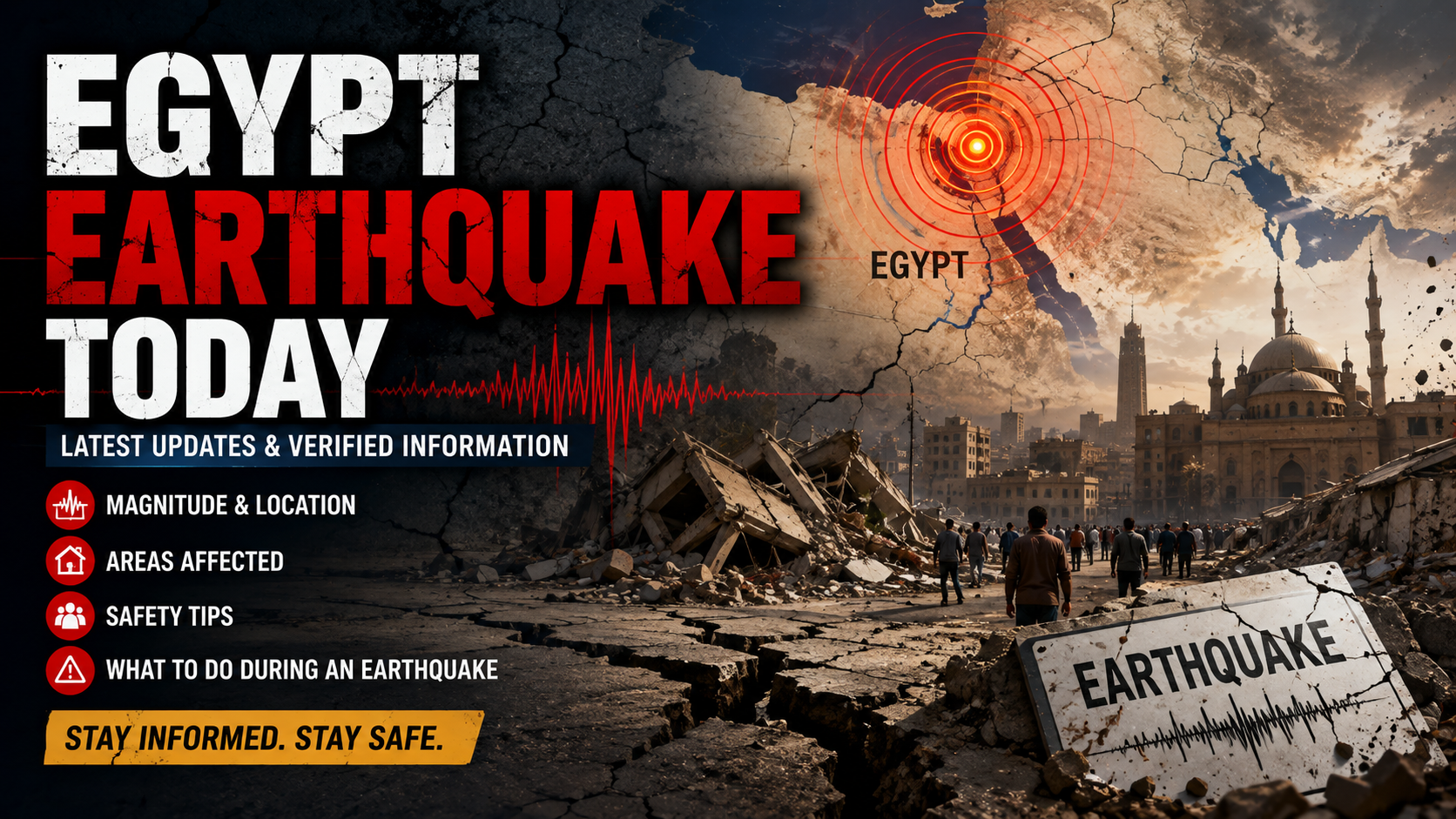
The search term Egypt earthquake today has gained significant attention as people look for the latest information about seismic activity affecting Egypt and neighboring regions. Earthquakes are natural geological events that can occur without warning, and even moderate tremors often raise concerns among residents, travelers, and emergency authorities.
Although Egypt is not considered one of the world’s most earthquake-prone countries, it has experienced occasional seismic activity throughout its history. Most earthquakes are minor and cause little or no damage, while stronger events may be felt across multiple cities and neighboring countries.
Whenever an earthquake occurs, government agencies, geological institutes, and emergency services begin assessing its magnitude, epicenter, depth, and potential impact. Understanding how earthquakes happen and knowing how to respond can help people stay calm and prepared during seismic events.
This article explains what is currently known about Egypt earthquake today, why earthquakes occur in the region, how they are monitored, and the safety measures everyone should follow.
What Happened?
Reports of seismic activity in or near Egypt have prompted many people to search for updates regarding the earthquake.
After an earthquake is detected, authorities typically evaluate:
The earthquake’s magnitude
Its epicenter
Depth below the Earth’s surface
Areas where shaking was felt
Possible structural damage
Any reported injuries
Official updates may continue as more information becomes available.

How Earthquakes Are Measured
Earthquakes are measured using seismic instruments that record ground movement.
Scientists analyze:
Magnitude
Depth
Location
Intensity of shaking
Aftershock activity
The magnitude indicates the amount of energy released during the earthquake, while intensity describes how strongly people experience the shaking in different areas.
Why Do Earthquakes Occur?
Earthquakes happen when stress builds up within the Earth’s crust.
When tectonic plates shift or faults suddenly move, energy is released in the form of seismic waves.
These waves travel through the ground, causing the shaking people experience during an earthquake.
Is Egypt Prone to Earthquakes?
Egypt generally experiences fewer major earthquakes than many other countries located along highly active tectonic plate boundaries.
However, seismic activity can still occur because of regional geological conditions, particularly near fault systems and neighboring tectonic zones.
Most recorded earthquakes in Egypt are relatively minor.
Areas That May Feel Tremors
Depending on the earthquake’s magnitude and location, shaking may be felt across several regions.
People may notice:
Light vibrations
Moving furniture
Swinging light fixtures
Rattling windows
Minor structural shaking
Larger earthquakes can be felt across neighboring countries if they occur at greater magnitudes.
How Authorities Respond
Following an earthquake, emergency agencies typically begin:
Damage assessments
Infrastructure inspections
Communication with local authorities
Public safety announcements
Monitoring aftershocks
If necessary, emergency services may also conduct rescue operations and provide temporary assistance to affected communities.
Understanding Aftershocks
Aftershocks are smaller earthquakes that follow the main event.
They occur as the Earth’s crust adjusts after the initial movement.
Some aftershocks are barely noticeable, while others can be strong enough to cause additional damage to weakened structures.
People should remain cautious after the initial earthquake.
Impact on Buildings
The effects of an earthquake depend on several factors.
These include:
Magnitude
Depth
Distance from the epicenter
Local geology
Building construction standards
Modern earthquake-resistant buildings generally perform better during seismic events.
Transportation and Infrastructure
Earthquakes can temporarily affect:
Road networks
Rail services
Airports
Bridges
Power systems
Communication networks
Authorities usually inspect critical infrastructure before restoring full operations if any disruption occurs.
Public Safety Tips
If you experience an earthquake:
Stay calm.
Drop to the ground.
Take cover under sturdy furniture.
Protect your head and neck.
Hold on until the shaking stops.
Stay away from windows and heavy objects that may fall.
If outdoors, move to an open area away from buildings, trees, and power lines.
If driving, safely pull over and remain inside the vehicle until the shaking ends.
What to Do After an Earthquake
Once the shaking stops:
Check yourself and others for injuries.
Avoid damaged buildings.
Listen to official announcements.
Expect possible aftershocks.
Use phones only for emergencies.
Follow instructions from local authorities.
Remaining informed is essential during the recovery period.
How Scientists Monitor Earthquakes
Modern earthquake monitoring relies on advanced technology.
Scientists use:
Seismographs
GPS networks
Satellite observations
Computer modeling
Global seismic monitoring systems
These tools allow rapid detection and analysis of earthquakes worldwide.
Can Earthquakes Be Predicted?
Despite major advances in geology, scientists cannot accurately predict the exact time and location of earthquakes.
However, monitoring systems help identify seismic activity quickly and improve hazard assessments.
Preparedness remains the best defense.
The Importance of Emergency Preparedness
Families should prepare emergency kits containing:
Water
Food
Flashlights
Batteries
First-aid supplies
Essential medications
Important documents
Having a preparedness plan improves safety during unexpected emergencies.
Why Accurate Information Matters
During major events, misinformation can spread rapidly through social media.
People should rely on:
Government announcements
National geological agencies
Emergency management authorities
Verified news organizations
Official information helps reduce confusion and panic.
Earthquakes and Regional Geology
Egypt’s seismic activity is influenced by broader geological processes occurring across northeastern Africa and the eastern Mediterranean region.
Researchers continuously study these geological systems to better understand earthquake risks and improve preparedness strategies.
Final Thoughts
The recent interest in Egypt earthquake today highlights how quickly people seek reliable information during natural events. While many earthquakes are minor and cause limited disruption, every seismic event reminds us of the importance of preparedness, accurate information, and strong emergency response systems.
Advances in earthquake monitoring technology allow scientists to analyze seismic events rapidly, helping authorities assess potential impacts and communicate important safety guidance. Although earthquakes cannot currently be predicted with precision, understanding how they occur and knowing how to respond can significantly improve public safety.
For the latest verified updates on earthquakes, weather, science, and global technology news, continue following Inetfreak.
Frequently Asked Questions (FAQs)
What caused the Egypt earthquake today?
Earthquakes occur when stress within the Earth’s crust is suddenly released due to movement along geological faults or tectonic plate interactions.
Can earthquakes in Egypt cause major damage?
The impact depends on the earthquake’s magnitude, depth, distance from populated areas, and local building standards. Many earthquakes are minor, while stronger events may require detailed assessments.
What should I do during an earthquake?
Drop to the ground, take cover under sturdy furniture, protect your head and neck, and hold on until the shaking stops.
Can earthquakes be predicted?
No. Scientists cannot accurately predict the exact timing of earthquakes, but modern monitoring systems quickly detect and analyze seismic activity.
Where can I find official earthquake updates?
Follow announcements from national geological agencies, emergency management authorities, and trusted news organizations for verified information.
This website is proudly managed by Shunya Digit.