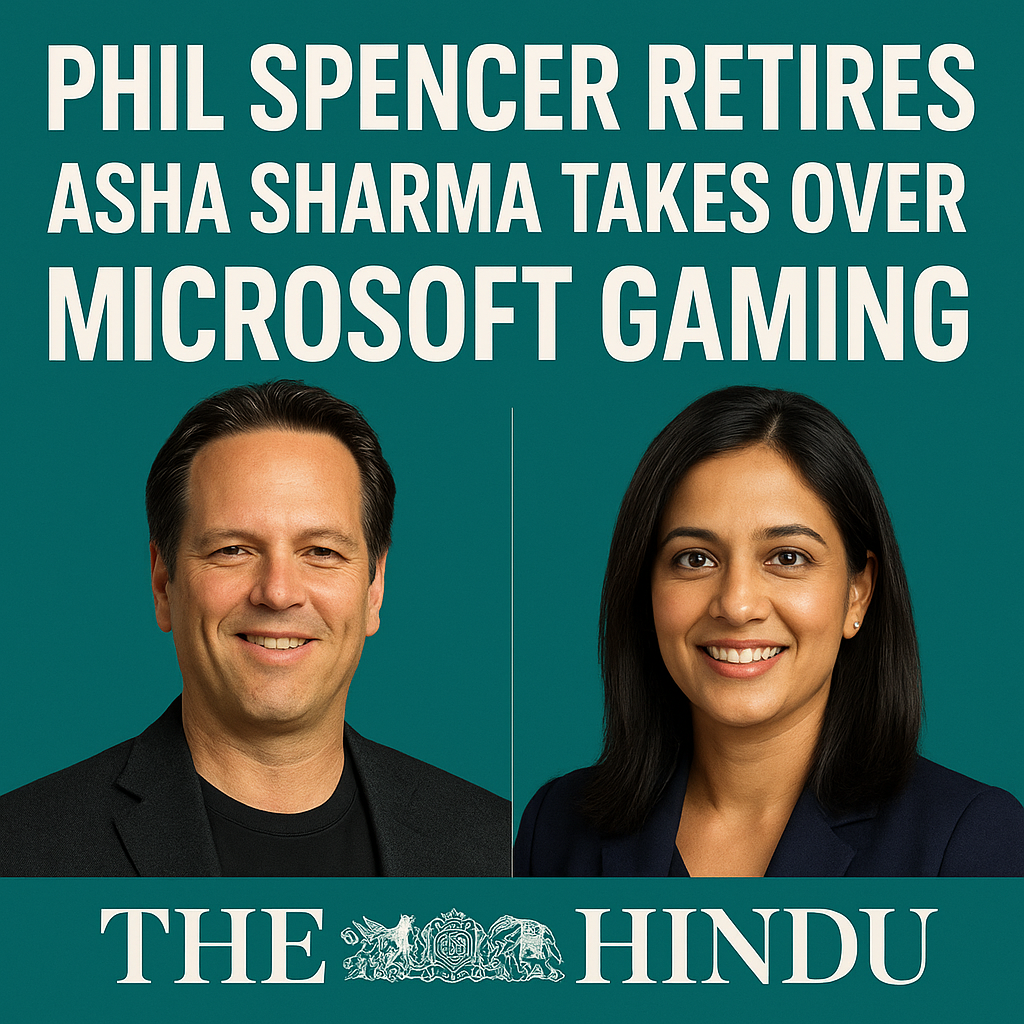
Microsoft’s gaming division is reportedly entering a new era. According to a report attributed to The Hindu, longtime Xbox chief Phil Spencer has retired, and Asha Sharma is set to take over the leadership of Microsoft Gaming. If confirmed, the change would mark one of the most significant transitions in Xbox history—coming at a moment when Microsoft is expanding its gaming footprint across consoles, PC, cloud streaming, and major studio acquisitions.
Phil Spencer retires: why this leadership change matters
For more than a decade, Phil Spencer has been the public face and strategic driver of Microsoft’s gaming ambitions. Under his leadership, Xbox evolved from a console-first brand into a broader ecosystem spanning:
- Xbox consoles and hardware innovation
- PC gaming through the Microsoft Store and Xbox app
- Subscription gaming via Xbox Game Pass
- Cloud gaming through Xbox Cloud Gaming (xCloud)
- Major studio expansion and publisher acquisitions
A retirement at this scale can signal a strategic reset, a continuation of a long-term plan, or a combination of both. For gamers, developers, and investors, the immediate questions revolve around continuity: Will Microsoft keep pushing multiplatform releases? Will Game Pass remain central? How will Microsoft manage studios and blockbuster franchises going forward?
The Hindu report: Asha Sharma takes over Microsoft Gaming
The reported appointment of Asha Sharma as the new head of Microsoft Gaming has quickly become a focal point for industry discussion. Leadership at Microsoft Gaming is not just an internal corporate role—it shapes the direction of Xbox consoles, Windows gaming, first-party studios, subscription strategy, and partnerships with third-party publishers.
While official corporate confirmation and detailed role definitions may vary as announcements develop, the core takeaway from the report is clear: Microsoft is preparing for a post-Spencer chapter, with a new leader expected to steward the business through its next phase of growth.
What “Microsoft Gaming” leadership typically oversees
Running Microsoft Gaming is a wide remit that can include strategic oversight across product, content, services, and community. In practical terms, the role often influences:
- Platform direction: Xbox console roadmap, Windows gaming integration, and device partnerships
- Content strategy: first-party release cadence, IP development, and studio management
- Services: Game Pass value proposition, pricing, tiers, and subscriber growth
- Cloud and streaming: cloud play expansion, performance upgrades, and regional availability
- Business development: acquisitions, licensing, distribution deals, and cross-platform strategy
Phil Spencer’s legacy at Xbox and Microsoft Gaming
Phil Spencer is widely associated with several defining themes that reshaped Xbox. Even critics often acknowledge that his era brought clearer identity and long-term planning to Microsoft’s gaming efforts.
1) The rise of Game Pass as a cornerstone
Xbox Game Pass became one of the most disruptive business models in modern gaming, changing how players discover games and how developers think about distribution. Spencer’s leadership tied Microsoft’s gaming identity to services as much as to hardware, pushing the concept of “play anywhere” across console, PC, and cloud.
2) A broader ecosystem beyond console wars
Rather than framing Xbox solely as a competitor in hardware sales, Microsoft positioned itself as a gaming platform provider. Cross-play, cross-save, and PC-first thinking became more common in Xbox messaging and product design. This approach helped Xbox remain relevant even as consumer behavior shifted toward subscriptions, digital libraries, and multi-device play.
3) Studio expansion and content scale
Microsoft expanded its first-party capabilities through studio acquisitions and investments, aiming to secure a steady flow of major releases. This strategy has had mixed public perception at times—especially when big games slip or studios restructure—but the underlying goal remained consistent: create long-term content strength across a portfolio of genres and franchises.
4) Accessibility and consumer-friendly initiatives
Xbox placed notable emphasis on accessibility features, controller innovation, and player-friendly policies. These initiatives reinforced Microsoft’s broader brand image of inclusive design and a community-first approach.
Who is Asha Sharma? What her leadership could signal
The reported successor, Asha Sharma, arrives at a pivotal moment for Microsoft Gaming. With a mature subscription platform, a large stable of studios, and evolving expectations for cross-platform releases, the next leader will likely be judged on execution: delivering consistent high-quality games, maintaining platform trust, and keeping the business sustainable.
If Sharma takes over, industry watchers will look for early signals in three areas:
- Operational focus: improving release pipelines, quality assurance, and studio coordination
- Portfolio clarity: balancing big-budget franchises with mid-sized titles and indie partnerships
- Platform strategy: defining what Xbox means when players increasingly use PC handhelds, cloud devices, and competing storefronts
What happens next for Xbox: key areas to watch
Leadership transitions often come with strategic refinement rather than immediate dramatic change. Still, in a fast-moving industry, even small shifts can ripple across pricing, exclusivity, and release schedules. Here are the most important areas to watch if the report proves accurate.
Game Pass strategy: pricing, tiers, and day-one releases
Game Pass is both a powerful customer acquisition tool and a major financial commitment. Gamers will watch for:
- Any changes to day-one first-party releases
- Potential price adjustments or new membership tiers
- More regional offers and partnerships to grow subscribers
For developers, the key question is how Microsoft balances subscription economics with premium game sales—especially for blockbuster titles.
First-party output: consistency and quality control
Microsoft’s studio network is vast, and expectations are high. A new leadership era could prioritize:
- More predictable release scheduling
- Longer polish cycles to improve launch quality
- Stronger creative autonomy paired with accountability
Exclusivity vs. multiplatform publishing
One of the biggest strategic debates in the industry is whether Xbox exclusivity remains central or whether Microsoft increasingly publishes on other platforms. The answer impacts console value, studio revenue, and long-term brand identity.
Under a new leader, Microsoft may:
- Continue selective exclusives for ecosystem differentiation
- Increase multiplatform releases to maximize reach and revenue
- Experiment with timed exclusivity or platform-agnostic launches
Cloud gaming and the future of Xbox hardware
Cloud gaming remains a long-term bet, but infrastructure, latency, and consumer habits differ by region. Microsoft will likely continue investing in cloud delivery while also evaluating the next wave of hardware—including potential handheld initiatives, streaming devices, or new console architectures.
Developer relations and third-party partnerships
Even with many first-party studios, Microsoft depends on third-party publishers to keep Xbox vibrant. Leadership changes can influence:
- Marketing partnerships and showcase priorities
- Revenue share policies and storefront improvements
- Tools and support for indie developers and mid-tier studios
Community reaction and industry impact
Any report involving Phil Spencer retiring will provoke strong reactions because Spencer has been closely associated with Xbox’s identity. Some players view him as a stabilizing force who rebuilt trust after difficult periods, while others measure his era primarily by the pace and consistency of blockbuster releases.
From an industry standpoint, the transition is important because Microsoft is one of the few companies with the scale to shape distribution trends—subscriptions, cloud gaming, cross-platform services, and the integration of gaming into broader tech ecosystems.
What this could mean for Microsoft as a company
Gaming is not a side project for Microsoft. It intersects with Windows, Azure cloud services, consumer hardware, and digital commerce. A new Microsoft Gaming leader may tighten alignment between:
- Azure and cloud streaming infrastructure
- Windows as a PC gaming platform and storefront
- AI and tooling to assist development workflows, testing, and player support
- Consumer services that build recurring revenue models
For shareholders, this is about sustainable growth. For players, it’s about whether the next era delivers more great games, better platform features, and clear value across devices.
Conclusion: A turning point for Xbox and Microsoft Gaming
The reported retirement of Phil Spencer and the rise of Asha Sharma, as cited by The Hindu, would represent a historic shift in leadership for Microsoft Gaming. Whether Microsoft continues the same path or makes strategic refinements, the next chapter will likely focus on execution: consistent first-party releases, a compelling Game Pass offering, and a coherent platform strategy that matches how people play in 2026 and beyond.
As more official details emerge, the gaming world will be watching closely—not only for what changes, but for what stays the same in Microsoft’s long-term vision of gaming as a service, a platform, and an ecosystem.
FAQs
Did Phil Spencer retire from Microsoft Gaming?
According to a report attributed to The Hindu, Phil Spencer has reportedly retired. Readers should also watch for official confirmation from Microsoft for the most accurate, finalized details.
Who is Asha Sharma and what role is she taking at Xbox?
The report states that Asha Sharma is set to take over Microsoft Gaming. The exact scope of her responsibilities will depend on Microsoft’s formal organizational announcement and reporting structure.
Will Xbox Game Pass change after Phil Spencer’s retirement?
There is no confirmed policy change solely based on the report. However, leadership transitions can influence pricing, tiers, and content strategy over time, so Game Pass will be a key area to monitor.
Will Xbox continue making exclusive games?
Exclusivity decisions are strategic and can vary title by title. If a leadership change is confirmed, Microsoft may continue a mix of exclusives and multiplatform releases depending on business goals.
What should Xbox players watch for next?
Players should watch for official Microsoft statements, organizational updates, and any near-term signals such as Game Pass announcements, first-party release scheduling, and messaging around Xbox hardware and cloud gaming.